

Work is where your laptop is: meet the globetrotting digital nomads
Samantha Scott does not miss her daily commutes in London, particularly “the dread of having to wake up and get on the tube, and heading into work sweaty and flustered. I’m still waking up at 6 or 7am, but I’m able to go for a walk on the beach before I start work.”
When she and her partner Chris Cerra arrive with their luggage in a new city, they can easily be mistaken for tourists. But they are part of a new generation of “digital nomads” who hop from country to country to live and work.
The global shift to flexible working triggered by the Covid-19 pandemic means more people are considering ditching their long-term homes to flit around the world, working from their laptops, tablets or smartphones.
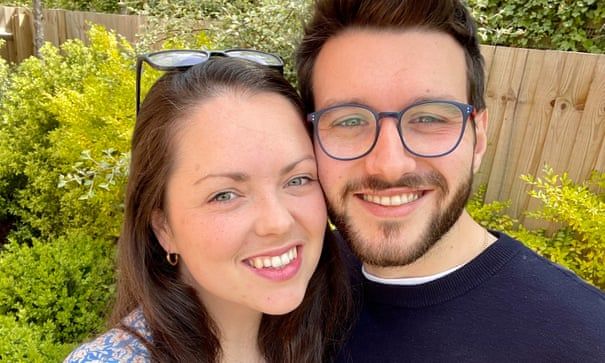 Samantha Scott and Chris Cerra. Photograph: Chris Cerra
Last week, a report from Airbnb entitled Travel & Living showed that 11% of the company’s long-term stay bookers in 2021 have reported living a nomadic lifestyle, and 5% plan to give up their main homes.
Delia Colantuono, a 31-year-old freelance translator from Rome, became a digital nomad five years ago when it was not a “big thing”.
She has now lived on all five continents and says the nomadic lifestyle is “not just for rich people – it’s for anyone who can work remotely and wants to do it”.
Many places are keen to attract long-term visitors, meaning bargains can be found. Colantuono has been renting a villa in Fuerteventura in the Canary Islands with three other nomads for €450 (£390) a month each.
Cerra, 28, a research and development technical consultant for a finance boutique, lived in several cramped flatshares in London and later rented an apartment with a friend for £1,000 a month per person. Since he became a nomad, accommodation costs have varied from £300 in Asia to more than £1,000 in Stockholm, Sweden.
High-speed wifi is top of the wishlist for nomads, followed by good workspace – desks or a large dining room table – a decent kitchen, and comfortable beds.
Chanin Kaye, 51, and her partner Jason Melton, 46, are six months into a seven-year road trip from Mexico to Argentina, staying for about a month in each city. They decided to leave their home in Seattle because they love travelling, and to save money to pay off large student debts.
“Seattle has a very high cost of living,” Kaye says. “We had a large house with two other roommates – and we were still paying $2,400 (£1,690) a month including utilities. Here [in Mexico] we never pay more than $1,200 all inclusive, and often less.”
They realised during the pandemic that they could keep in touch with their grown kids remotely “and feel close even when we aren’t physically close”.
Melton left his sales job and the couple now run an accounting business remotely together that Kaye has set up. “We work all day and go on adventures all weekend,” she says.
Kaye reckons the couple save 70% by living on the road, and wants to be debt free within five years – and buy a property somewhere eventually.
Colantuono and others are aware of the environmental impact of their jetsetter lifestyle, and want to settle down eventually. Several people, writing on a Facebook digital nomads forum with 15,500 members, say age is not a barrier but stress the importance of being fit and healthy; and one says a drawback of this lifestyle might be a sense of rootlessness.
There do not appear to be many digital nomad families with children; traditionally, only a few families – who usually home-school – have travelled the globe. Erin Elizabeth Wells, a 41-year-old productivity consultant from Massachusetts, started travelling around the US with her husband and daughter Eleanor, who is nearly four now, in October 2018, and says they are a “world schooling family”.
Travelling with family means they travel slowly, but that means they make friends everywhere they visit, she adds. They are living in Airbnbs or other full-furnished rentals and “plan to continue indefinitely until there’s some reason our family needs something else”.
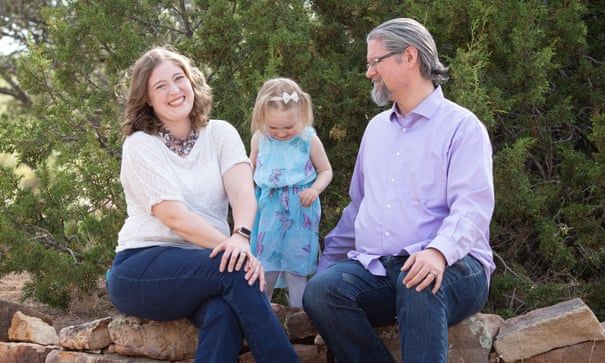 Erin Elizabeth Wells with her husband, and daughter Eleanor.
As parts of the world gradually reopen after Covid restrictions, growing numbers of people are enjoying new flexibility to work from anywhere. Last year, nearly one in five Airbnb guests used the site to travel and work remotely; and this year 74% of people across its five-country survey have expressed an interest in living somewhere other than where their employer is based. Brian Chesky, the Airbnb chief executive, said: “The boundaries between travel, life and work are blurring.”
Cerra says: “For a long time, this kind of lifestyle was considered really, really out there, quite off the beaten track. What we’re seeing is that everything is trending towards this being a bit more normal now, more accepted.”