Trump–Saudi Rapprochement Advances Despite Riyadh’s Resistance to Israel Normalization
Saudi Crown Prince resists joining Abraham Accords until a Palestinian state emerges, leaving Israel ties on hold for now
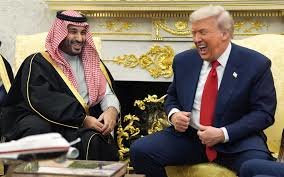
United States President Donald Trump and Saudi Crown Prince Mohammed bin Salman reaffirmed extensive defence and commercial cooperation during the crown prince’s visit to Washington — even as Saudi Arabia declined to formalise diplomatic ties with Israel, keeping normalisation off the table for the moment.
The White House hailed the strengthening of bilateral relations, while Riyadh reiterated its long-standing demand for irreversible progress toward a Palestinian state before any formal accord with Israel.
In private talks at the White House, Trump pressed the crown prince to join the Abraham Accords and normalise relations with Israel.
His hopes were met with polite but firm resistance: bin Salman said the domestic mood in Saudi Arabia — deeply shaped by the war in Gaza and strong public opposition to Israel — does not allow for immediate normalisation.
He insisted that any agreement must be conditional on a two-state solution for the Palestinians.
Despite the standstill on Israel, the visit produced concrete agreements.
Riyadh was granted “major non-NATO ally” status, a move that enhances Saudi access to U.S. weapons exports and defence cooperation frameworks.
The two governments also cemented deals on nuclear cooperation, economic investment, and civil-nuclear energy planning — signalling a deepening of strategic ties irrespective of the unresolved diplomatic question over Israel.
For Israel, the outcome is a sobering reminder that full regional normalisation remains elusive.
Some Israeli officials voiced disappointment, but others framed Saudi restraint as cautious realism rather than rejection — a pause rather than a permanent roadblock.
Observers note that by decoupling defence and nuclear cooperation from normalisation, U.S. and Saudi leaders have crafted a partnership structure resilient to current political headwinds.
The mixed results underscore a central paradox in Middle East diplomacy: while economic and security-driven convergence between Riyadh and Washington is accelerating, the broader vision of a Middle East reshaped by sweeping Arab-Israeli reconciliation remains on hold — pending a durable resolution to the Palestinian issue.
The crown prince’s stance suggests Riyadh prefers to compartmentalise cooperation, advancing strategic interests now while keeping the path to normalisation open for the future.
The White House hailed the strengthening of bilateral relations, while Riyadh reiterated its long-standing demand for irreversible progress toward a Palestinian state before any formal accord with Israel.
In private talks at the White House, Trump pressed the crown prince to join the Abraham Accords and normalise relations with Israel.
His hopes were met with polite but firm resistance: bin Salman said the domestic mood in Saudi Arabia — deeply shaped by the war in Gaza and strong public opposition to Israel — does not allow for immediate normalisation.
He insisted that any agreement must be conditional on a two-state solution for the Palestinians.
Despite the standstill on Israel, the visit produced concrete agreements.
Riyadh was granted “major non-NATO ally” status, a move that enhances Saudi access to U.S. weapons exports and defence cooperation frameworks.
The two governments also cemented deals on nuclear cooperation, economic investment, and civil-nuclear energy planning — signalling a deepening of strategic ties irrespective of the unresolved diplomatic question over Israel.
For Israel, the outcome is a sobering reminder that full regional normalisation remains elusive.
Some Israeli officials voiced disappointment, but others framed Saudi restraint as cautious realism rather than rejection — a pause rather than a permanent roadblock.
Observers note that by decoupling defence and nuclear cooperation from normalisation, U.S. and Saudi leaders have crafted a partnership structure resilient to current political headwinds.
The mixed results underscore a central paradox in Middle East diplomacy: while economic and security-driven convergence between Riyadh and Washington is accelerating, the broader vision of a Middle East reshaped by sweeping Arab-Israeli reconciliation remains on hold — pending a durable resolution to the Palestinian issue.
The crown prince’s stance suggests Riyadh prefers to compartmentalise cooperation, advancing strategic interests now while keeping the path to normalisation open for the future.