

The brazen arrest of a Belarusian activist has terrified dissidents all over the world
Roman Protasevich was arrested in Minsk, the Belarusian capital, after Ryanair flight 4978 was diverted to land in the country following a "security alert." He is charged with "organizing mass riots and group actions that grossly violate public order," from outside the country, via his Telegram channel.
He has confessed to the charges in a video which his supporters believe was made under duress.
Life has been difficult for Belarusian dissidents since last year's elections, in which Lukashenko, often described as Europe's last dictator, claimed to have won over 80% of the vote.
In the weeks that followed, mass protests took place across the country with many believing that the poll was rigged. Three of the women who stood in opposition to Lukashenko disappeared from sight or fled the country in fear for their lives after the election.
"No one can feel safe in Europe," Franak Viacorka, an adviser to Svetlana Tikhanovksya, one of those opposition figures, told CNN earlier this week, speaking about the wider repercussions of Belarus's forced downing of the Ryanair plane for the entire continent.
Speaking from exile in Lithuania, Viacorka said in a subsequent interview that even in Vilnius, he had received death threats and made to feel unsafe. "There are no limits for this regime. I have a special application which sends a signal to my friends and family if something happens to me."
While skyjacking is in itself a very unusual act, this kind of transnational repression is increasingly common in a world where authoritarians are less afraid of consequences.
"What's more common is states using the institutions of other states in order to get to people," says Nate Schenkkan, co-author of Freedom House's report, Out of Sight, Not Out of Reach: Understanding Transnational Repression. "Authoritarian states might label someone a terrorist at home then recruit local law officials to have them detained and deported," he explains.
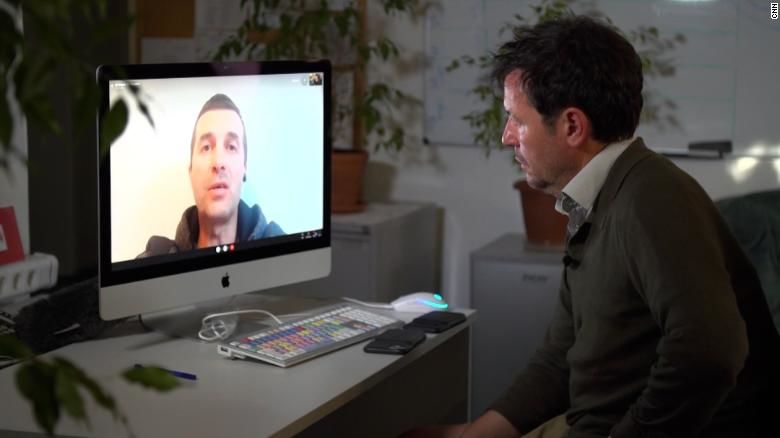 Roman Protasevich appeared in a video from a Minsk detention center.
Schenkkan points to the case of Roohollah Zam, an Iranian activist who was lured from France to Iraq where he was subsequently kidnapped, taken to Iran and executed. "This case is important to note as he was also operating a Telegram channel which allowed him to have an influential voice while overseas. The regime didn't like that."
The report also highlights the case of Paul Rusesabagina, a high-profile critic of Rwandan president Paul Kagame. Rusesabagina's family believes he was kidnapped from Dubai in August 2020.
Schenkkan's report explains that Rwanda's government claimed they had "achieved his return through 'an international arrest warrant,' only for the authorities in the United Arab Emirates to deny that they had cooperated in the return." This was claimed, the report says, to add some legitimacy to the abduction.
Freedom House found that transnational repression is becoming a normal phenomenon, noting that many governments were using the same methods to attack their critics abroad. Those methods ranged from outright detention to online intimidation. Alarmingly, it concludes that the "consequences for transnational repression are currently insufficient to deter further abuse."
These trends of copycat repression and insufficient consequences have not gone unnoticed by dissidents elsewhere. And for many, the case in Belarus has stoked further fears.
"With China and Russia arduously promoting authoritarianism, leaders have more confidence in committing human rights violations," says Nathan Law, a Hong Kong human rights activist exiled in London. "I may now need to not only avoid going to countries where China has good relationships, but also taking planes flying over their territory," he said, following the detention of Protasevich in Belarus.
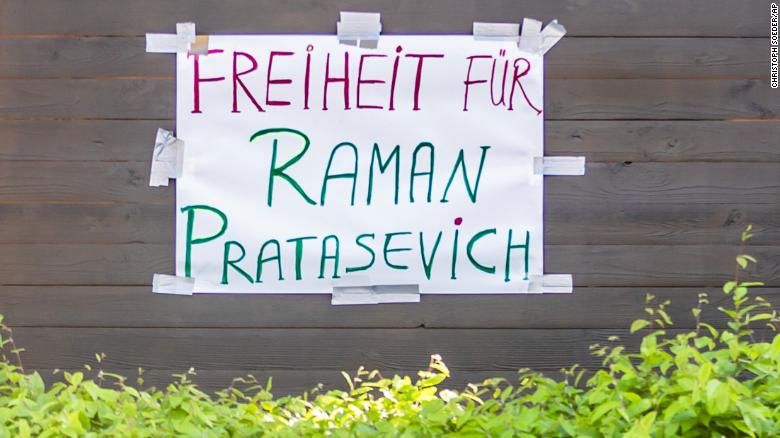 "Freedom for Raman Pratasevich" (Protasevich) is written on a protest
wagon in front of the Embassy of Belarus in Berlin, Germany, Monday, May
24, 2021.
"Freedom for Raman Pratasevich" (Protasevich) is written on a protest
wagon in front of the Embassy of Belarus in Berlin, Germany, Monday, May
24, 2021.
Law is one of the six activists in exile that Hong Kong police have issued an arrest warrant for under its controversial national security law, which claims worldwide jurisdiction and allows for extradition to the Chinese mainland.
Why are the consequences so insufficient for egregious offenders? Tatyana Margolin, Eurasia director at Open Society Foundations, thinks it's a cocktail of a rise in global authoritarianism and a growing indifference to those leaders from citizens of democratic nations.
"We can safely say that the authoritarian tide has moved across the world, including in the US under Trump's presidency," Margolin says, pointing to Donald Trump's perceived love of strongmen in countries like Russia and Saudi Arabia.
"Citizens in the West are less bothered about the plight of migrants now, so are less compelled to have sympathy for people seeking refuge. This has led to immigration policies that make attaining refugee status harder and people easier to target," she adds.
Trump's friends in Russia and Saudi Arabia have been guilty of some of the worst examples of transnational repression in recent years.
The brazen behavior of the two Russian operatives believed to be behind the 2018 attempted murder of former Russian spy Sergei Skripal and his daughter in the English town of Salisbury is a good indication of how much Moscow cares about the consequences of these actions. The pair gave an almost mocking interview to Russian state TV shortly after being identified as suspects in the nerve agent poisonings, making light-hearted claims about being cathedral enthusiasts who were only in the UK to visit the historic town. The mountain of evidence against them suggests otherwise.
Multiple Western nations, including the US, imposed sanctions on Russian companies and individuals, and expelled Russian diplomats in the wake of the Salisbury attack, though it's unclear if these actions have cowed Moscow.
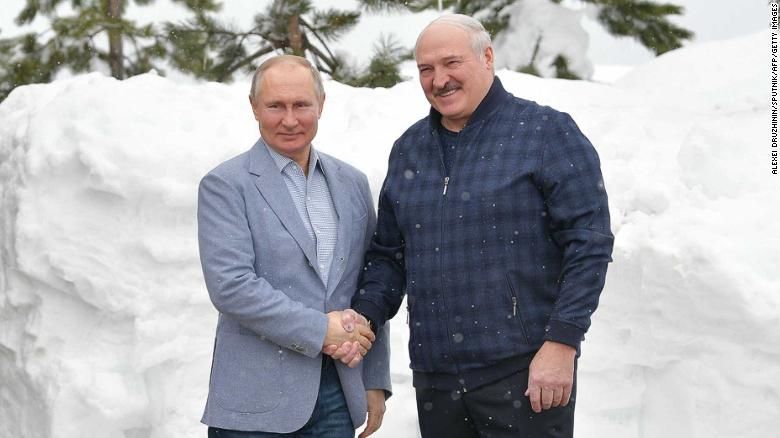 Russian President Vladimir Putin (L) shakes hands with Belarus President
Alexander Lukashenko during their meeting in Sochi on February 22,
2021.
Russian President Vladimir Putin (L) shakes hands with Belarus President
Alexander Lukashenko during their meeting in Sochi on February 22,
2021.
"I don't think the words safety or security apply to anyone who is opposition in Russia," says Vladimir Kara-Murza, a Russian opposition politician who has been poisoned twice in Moscow in five years, told CNN last year.
Vladimir Ashurkov, another opposition figure, says that the "situation with Roman Protasevich is probably every dissident's nightmare." Speaking from London, he adds that he has "no doubt that Russian security services are capable of conducting assassinations," and expresses concern that Lukashenko "raised it to a new level with the usage of a hoax bomb" -- a concern of many who fear that what one authoritarian leader gets away with, others emulate.
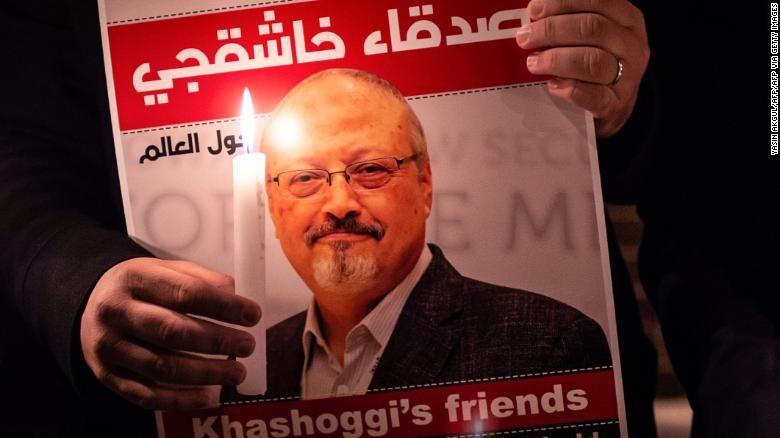
The most reported incident in recent years was probably the murder of Saudi dissident Jamal Khashoggi in Turkey in 2018. Numerous reports have pointed the finger at the inner circle of Crown Prince Mohammed bin Salman, but no real action has been taken against Riyadh's most powerful man.
Then-president Trump was criticized for ignoring CIA findings that bin Salman personally directed the murder.
Ali Al-Ahmed, a high-profile dissident based in Washington DC, says that he avoids traveling for fear of being "taken or killed." "It happened to Jamal and it could happen to me," he says, adding that traveling to other Arab countries is not an option because he fears being "captured and sold" back to the Saudi government.
Al-Ahmed also explains that even with the security that should come with living in the US, he is still subjected to intimidation online. "People accuse me of being a terrorist, presumably to make Americans nervous of me and to build a case for having me arrested and extradited."
Despite authorities in the US knowing the kind of misery Al-Ahmed lives with, he says "we have to be realistic." He says that even countries like the US and UK, which bill themselves as human rights defenders, have to have a "pragmatic" relationship with Saudi Arabia.
"If they gain something from placing sanctions on MBS, they will. If they need to maintain a relationship, they will make a load of noise but will put sanctions on lesser figures," he adds.
What can be done to make Western governments care and act? For now, very little. The trend towards more inward-looking societies has existed for some time -- and the coronavirus pandemic has done nothing to help.
"We are moving towards a state-centric world view which has resulted in migration policies that are more interested in national security than refugees," explains Schenkkan.
This insular, nationalist thinking means it's harder to make people care about things that happen to other people. Margolin believes that the Belarus arrest will be old news very soon.
"There is outrage across the world, but how long will it last? It will be replaced by another story and things in Belarus will go back to normal. The international community must stand with the people of Belarus and ensure that doesn't happen," she says.
The dire situation facing political dissidents living in exile is unlikely to improve soon. Until Western leaders make meaningful stands against countries like China, Saudi Arabia, Russia and many others, the benefits of capturing a political opponent for domestic reasons will outweigh the risk.
And, unfortunately for the people this most affects, that won't happen while so many of the world's largest democracies place human rights below economic or strategic interests with some of the most oppressive regimes on earth.