

The awkward multi-polar world of the West versus ever-wealthy developing countries
When Jim O'Neill, the Goldman Sachs banker, popularised the term BRIC in 2001, he was talking about investment opportunities in the fastest growing economies in the world: Brazil, Russia, India and China, with South Africa added in 2010 making the acronym up to BRICS.
The countries identified swiftly formed a club, with leaders meeting regularly for summits. Vladimir Putin may well dodge sanctions to attend the next meeting in August in South Africa.
The political clout of the BRICS is turning out to be as important as their increasing economic heft. Assumptions in 2001 that these countries would become friendly allies in a US-dominated world order are proving false.
None of the BRICS have backed the West - roughly comprising the US, UK, EU and Japan - in opposing Russia's invasion of Ukraine.
Russia is the aggressor in Ukraine, and China is its "partner without limits", as agreed by presidents Xi and Putin, so no surprise there.
India and South Africa have economic and energy needs and colonial resentment, which Russia and China have been keenly exploiting.
Hopes were highest that Brazil might support the Western position, under the newly restored leadership of President Luiz Ignacio Lula da Silva. Instead, Lula celebrated his first 100 days back in office with a state visit to China, and by playing host to the Russian foreign minister Sergei Lavrov.
In public statements, Lula attacked the US for "encouraging" and "incentivising" the Ukraine conflict, bemoaned the US dollar's role as the global reserve currency and argued for "new geopolitics to change world governance by giving more representation to the UN".
His foreign minister, Fernando Haddad, warned bluntly that Brazil is "too big to be choosing partners".
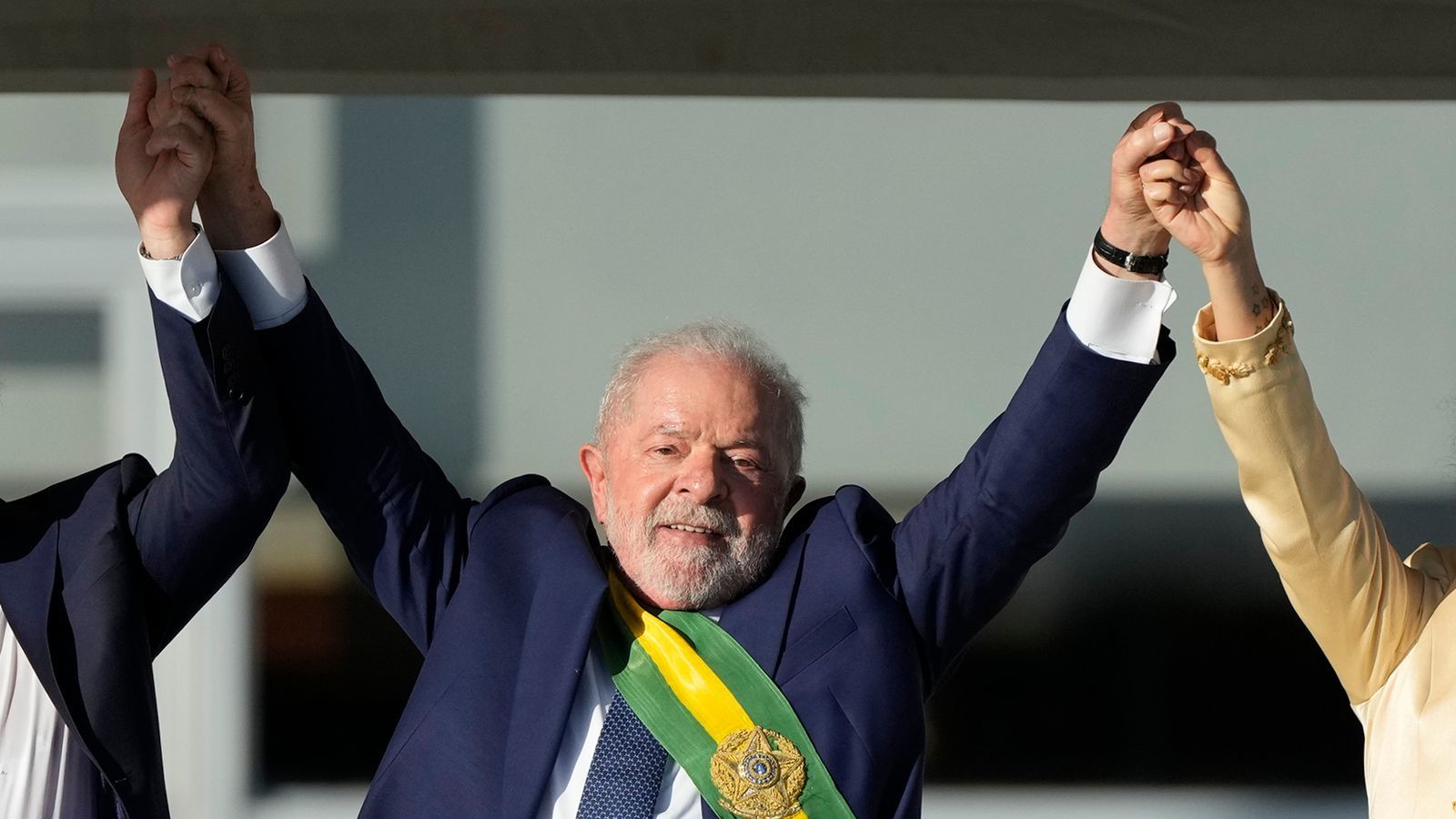 Lula was sworn in as Brazil's president for the third time in January
Brazil's international political stance is also critical when the United States' "unipolar moment" of world dominance is over and new superpowers such as China and India are rising, potentially threatening the "Western democratic" notions of governance established after the Second World War.
Lula served two terms as president of Brazil between 2003 and 2010. A working-class trade unionist from the Workers Party, his repeated electoral success consolidated his country as a representative democracy. He was feted as a regular guest at the summits of the G7 club of rich nations.
After standing down as president in 2010 he was convicted and imprisoned on corruption charges. These were subsequently annulled, enabling him to run for office again in 2022. European leaders barely hid their satisfaction when he beat the right-wing Trumpian incumbent Jair Bolsonaro in the second round of voting.
Western leaders praised Lula
Prime Minister Rishi Sunak tweeted: "Congratulations to @LulaOficial on his victory in Brazil's election.
"I look forward to working together on the issues that matter to the UK and Brazil, from growing the global economy to protecting the planet's natural resources and promoting democratic values."
Keir Starmer was similarly effusive: "Congratulations to @LulaOficial on the great news of his election as president of Brazil. This win must also be the start of a new era of global cooperation and action in the fight against climate change."
Lula reappointed his sometime rival Marina Silva, a widely respected politician and environmentalist, as minister of the environment and climate change, but so far delivery by his administration has been disappointing.
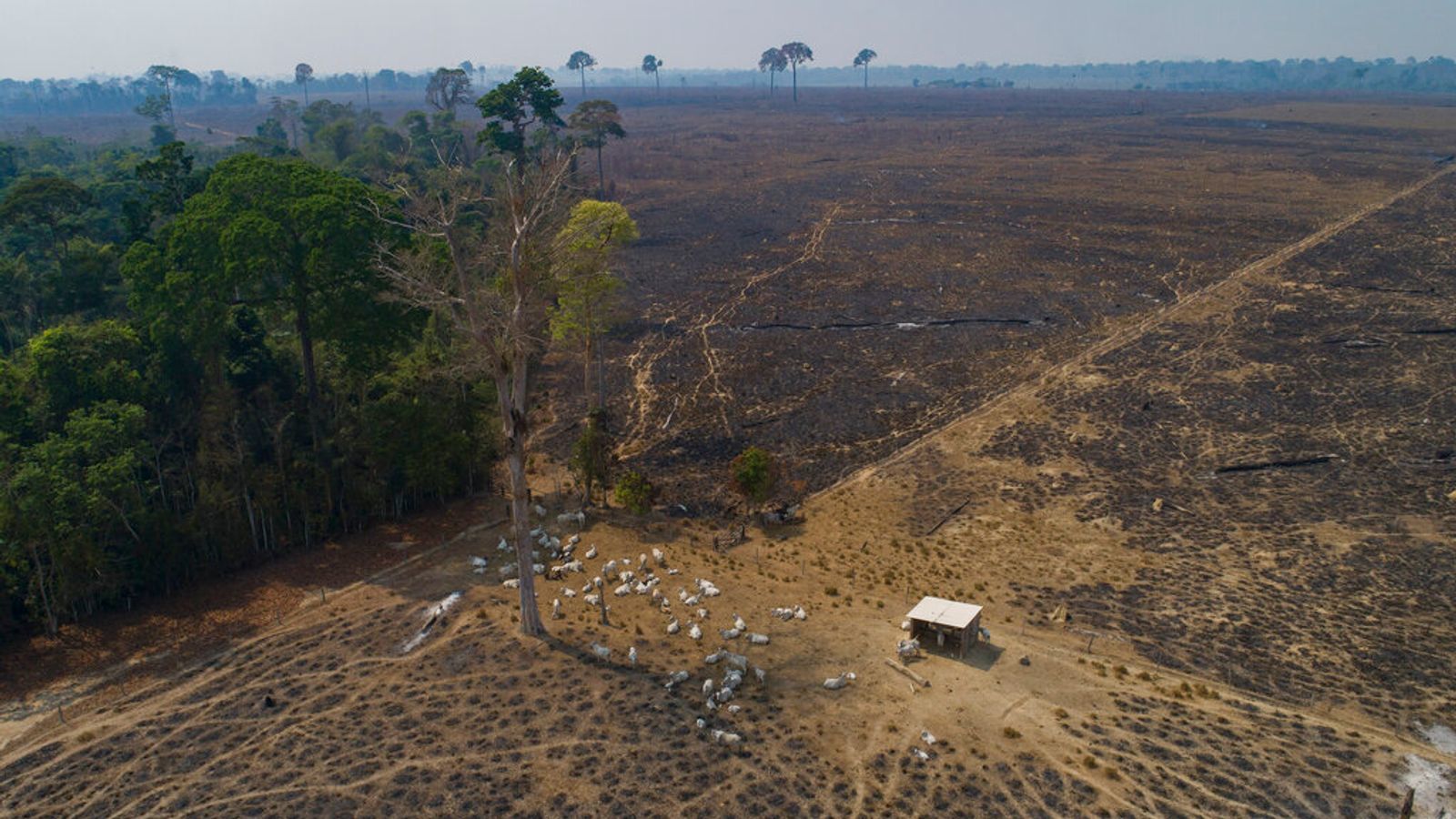 Deforestation in the Amazon is not slowing down
The rate of deforestation in the Amazon went up 75% under President Bolsonaro and it has not yet slowed down. February 2023 was the worst ever month.
According to the DEFER surveillance by Brazil's own INPE (National Institute for Space Research) 209 square kilometres of forest were destroyed, the equivalent of 30,000 football pitches.
Lula's priorities for his presidency are fighting hunger and poverty and managing de-industrialisation through investment in new technologies. He has also set the ambitious target of zero deforestation by 2030. This is largely dependent on international donations to the Amazon Fund.
Both Germany and Norway have resumed their pledged contributions since his return to office. But the European Union is getting anxious about Brazil's evolving stance. A briefing paper for next week's EU foreign ministers summit, seen by Politico, "is concerned about Brazil's position on Russia's war on Ukraine and Brazil's lack of delivery on climate environment".
These concerns are likely to further delay completion of an historic trade and cooperation pact with the Mercosur trade bloc (Brazil, Argentina, Uruguay and Paraguay) which has been under discussion for 20 years. After signing a Double Tax Agreement with Brazil in December the UK is also hoping for a deal and increased trade with Brazil.
Environmental concerns v closer economic ties
Closer economic ties are threatened by environmental concerns in Europe. To take the area of agricultural exports as an example, the UK government is being pressed to take a tougher line on so-called "Cattle-laundering", the practice whereby animals are raised on illegally deforested land but moved to other farms to qualify as legal meat at slaughter.
The censorious imposition of trade sanctions by the US and Europe for political reasons and perceived violations of international laws is antagonizing other countries. Instead of entering into multilateral rules-based agreements, Brazil, like many other middle to high income economies, is striking bilateral deals with China and Russia. In China's case, this is often backed up by inward investment and foreign aid.
At this month's IMF World Bank meeting the former US Treasury Secretary Larry Summers admitted he is troubled that the US and its allies are becoming isolated as other powers get together. People from developing countries are saying to him: "What we get from China is an airport. What we get from America is a lecture."
China is already, by far, Brazil's greatest trading partner, exchanges are at a record of high of $150 billion annually.
"The West" may broadly agree on political outlook but their circumstance means that the US and European nations are dealing with Chinese expansionism in different ways.
The US has the capacity to be largely self-sufficient and, encouraged by incentives in President Biden's Inflation Reduction Act, is "re-shoring" key technologies. Ford has closed its electronic vehicle plant in Brazil.
Friction over Ukraine
European politicians want to increase investment in energy and digital in Latin America and they are in desperate need of raw materials and rare earth minerals from there for new technology. From Bolivia to Afghanistan, China is investing in lithium extraction, a key element in batteries.
Following outcry in the US and Europe, President Lula has not repeated his early view of Ukraine's President Zelenskyy that "this guy is responsible as Putin for the war" and has conceded that Russia is in "violation of Ukraine's territorial integrity".
Next week, Lula is due to visit Spain - his country's closest historical links are with Iberia. It remains to be seen if he will take up Zelenskyy's invitation to come and see what is happening for himself.
Lula has suggested that Ukraine should be ready to "give up Crimea". His stance is consistent with Brazil's longstanding non-aligned advocacy of "peace". It is also a de facto strengthening of Russia's position in the eyes of the world community if and when peace negotiations take place.
It undermines NATO's determined opposition to reverse the violent occupation of the party of another sovereign state. The stakes over Taiwan and its world-beating micro-chip industry have been raised even higher.
The alternative diplomatic and economic path being taken by the BRICS, and especially Lula's democratic Brazil, which was potentially the West's most natural ally in the Ukraine crisis, is writing on the wall for the UK and its European neighbours.
Our values are not supreme. The US umbrella is not a sufficient shield. Welcome to the awkward multi-polar world.