

Scientific tips for staying cool in a heatwave
The oppressive temperatures of a heatwave can have far-reaching impacts, from risks to human health to destroying crops and increasing the risk of wildfires. In 2019, extreme heat is estimated to have caused the deaths of 356,000 people worldwide, according to one set of estimates, making it one of the most dangerous yet overlooked natural hazards. While there is still a great deal of uncertainty about toll that heatwaves take (the World Health Organization estimates 166,000 people died between 1998 and 2017, by comparison), there is little doubt that the number of people exposed to heatwaves around the world is increasing.
And climate change is only likely to make heatwaves more frequent and intense in the future. Over the years, BBC Future has covered many different aspects of living with and enduring extreme hot weather. Here we round up some of what we have learned.
How do you stay cool in a heatwave?
It's crucial to stay cool in hot weather as it can have serious effects on your health (see further down this page). Fortunately, there are some simple steps you can take to find relief when the temperatures climb to uncomfortable levels.
Keeping out of the sun between 11am to 3pm – usually the hottest parts of the day – either by staying indoors or in a shaded area, is an obvious step. It is also important to drink plenty of liquid, including hot and cold drinks (unless it is very humid, in which case hot drinks aren't the best idea). But it's best to avoid drinking lots of alcohol, although a beer or two may still help to hydrate you.
Eating foods with high water content such as strawberries, cucumber, lettuce and watermelon can also help you to stay hydrated. Spicy and hot foods have also been shown to help us stay cool by making us sweat more.
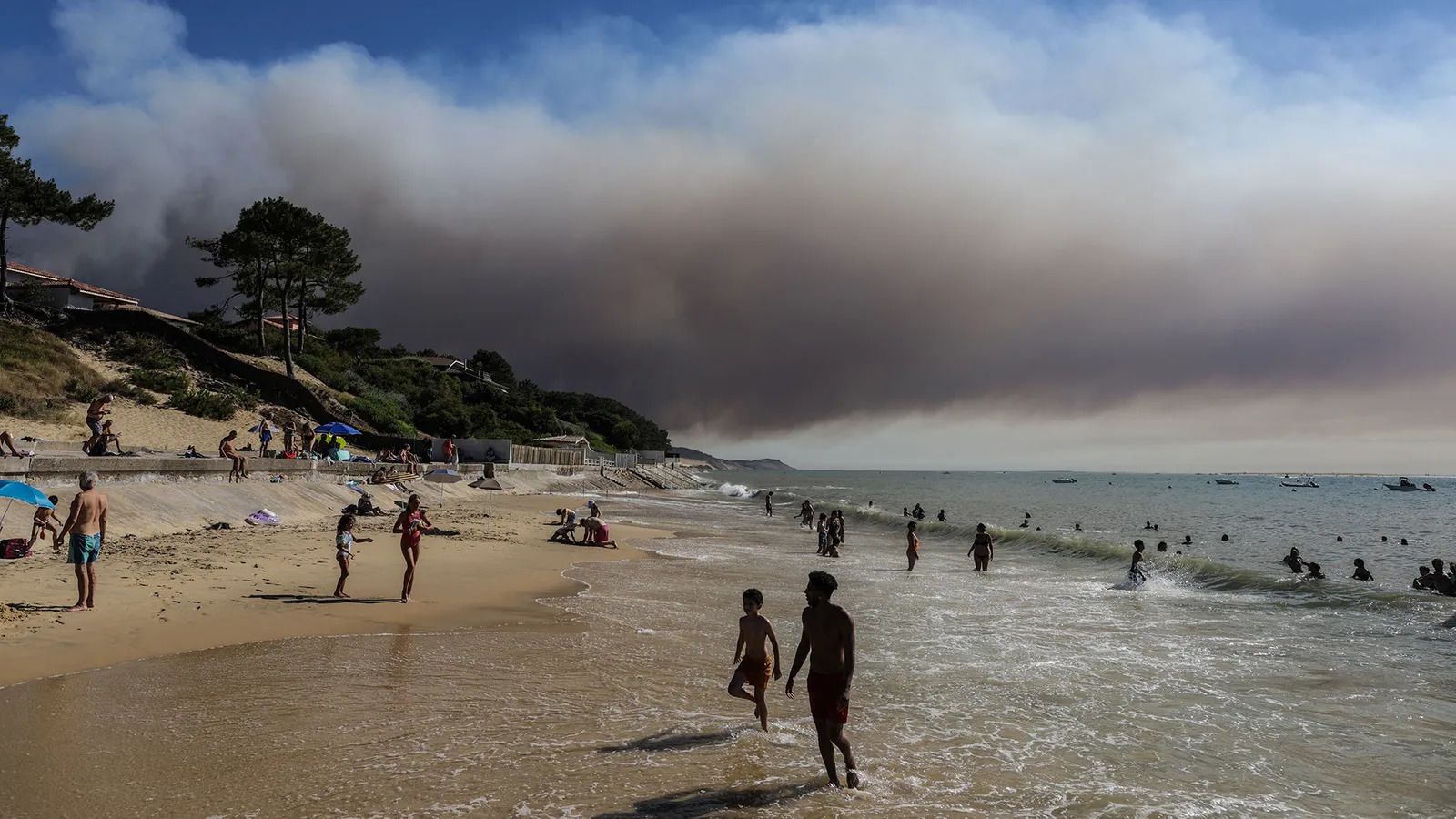 Heatwaves are likely to make summer months more challenging in the decades to come
While the evidence on the colour of clothing is mixed – there appears to be little difference between wearing light or dark clothing as a study of Bedouin tribes in the 1980s revealed – wearing loose-fitting clothes can help by allowing air to circulate next to your skin.
You should also think twice before you open all the windows of your house to keep cool – if the temperature if higher outside than inside, you might lose a possible cool haven. Close the curtains in rooms where they face the sun instead.
One of the easiest ways to stay cool can be to take advantage of the temperature change in the air when water evaporates. Taking a cold shower or a swim can help you cool down quickly. Ancient societies placed earthenware jars of water or wet sheets in front of a window or a draughty spot, helping to cool the air as it passes over it. This can also work if you are using a fan by blowing the air over a bowl of ice or cool wet sheet.
However, the evidence on the effectiveness of fans is quite mixed, largely due to a lack of good quality randomised trials. Generally, fans are thought to help in temperatures up to 35C (95F), but above that blowing hot air across the body could make the situation worse and even increase dehydration. It's also worth remembering that fans use motors to work, and so generate some heat of their own while running, so it is a good idea to keep a window ajar to improve the flow of air.
In the longer term there are a huge variety of ways we could adapt our houses and buildings to stay cooler in high temperatures, from wind catchers – towers which create cross ventilation in buildings and have been used by societies for millennia, to green roofs and corridors. Trees are an amazing way to keep cities cool – and even a single tree in a street or a garden can provide measurable cooling benefits. Meanwhile, cities such as Tokyo have experimented with new ways to keep a wider city cool, from solar-blocking paint to new types of low-energy air conditioning.
Sleeping in a heatwave
Temperature plays an important role in the human sleep cycle (and that of all mammals). As our bedtime draws near, our core body temperature typically falls along with our heart rate, and is thought to increase the familiar sensation of sleepiness. The veins in our hands and feet also open up to allow more blood through them, increasing the temperature of our skin and increasing heat loss.
But on hot, sticky nights, it becomes harder for our bodies to lose heat, meaning our ability to drift off to sleep is also affected. Hot night-time temperatures can also lead to more disrupted sleep, leaving people feeling more tired the following day.
Bed-sheets, duvets and night-time clothing such as pyjamas help to create a microclimate around our skin that maintains this optimal temperature
The ideal room temperature for sleep is reported to be between 19-21C, although some research suggests we require our skin to be at a temperature of between 31-35C. Bed-sheets, duvets and night-time clothing such as pyjamas help to create a microclimate around our skin that maintains this optimal temperature.
And when temperatures begin to rise, our first instinct might be to throw off the bed sheets to expose more of our skin to the air to help us cool down. Unfortunately some research suggests this isn't as helpful as you might think because it disrupts the body's ability to control the temperature next to our skin through the night. So a thin sheet – rather than something thicker that might provide too much insulation – can help to ensure a better night's sleep.
A better option might be to use a fan to increase the amount of air flowing over your body at night. Researchers have found that overhead or ceiling fans in particular help to distribute a gentle flow of air over the body, reducing the number of times people wake during the night.
Opening windows can also help if there is a gentle breeze, but in cities the noise from outside could only make matters worse. Keeping your curtains shut during the day, especially when the Sun is on the windows, can help to prevent your bedroom from heating up too much.
Avoiding late night snacks can also help. Late-night eating has been linked to elevated night-time core body temperatures, which can disturb our sleep.
How does hot weather affect our health?
The human body's ideal temperature lies between 35.01C and 37.76C (95-99.9F), depending on how it is measured, although most medical experts accept an average of 36.8C (98.2F). When the surrounding air nears or exceeds this temperature, particularly when humidity is high, the body's ability to cool itself weakens. One study from 2020 found the upper limit of what the human body can survive without serious health effects is a wet-bulb temperature of 35C (95F) – which is a measure of both temperature and humidity together. In high levels of humidity, it is harder for sweat to evaporate and so cool down.
When the body becomes too hot or struggles to regulate its temperature, it can lead to heat exhaustion. It can come on quickly or over a few hours, but symptoms include feeling faint, excessive sweating, clammy skin, cramps and nausea. This can also lead to heatstroke, which means the body can no longer manage the heat and you should seek medical attention. Symptoms include feeling confused, vomiting or nausea, no sweating, excessively hot skin, and loss of consciousness or seizures.
Heatwaves can also lead to a range of health problems as diverse as headaches and dehydration to heart attacks and respiratory problems, sometimes leading to death. While people of all ages are susceptible to the heat, the elderly are particularly at risk during heatwaves as they are less able to regulate their body temperature, and are more vulnerable to heart problems due to heat stress. Those with underlying health conditions are also particularly vulnerable.
It is estimated that half of the global population and around one billion workers are exposed to periods of harmful high temperatures.
 Climate change is causing heatwaves to last longer and become more frequent
Hot weather has also been associated with worse outcomes in pregnancy and birth, higher suicide rates, mental health issues and increased hospital admissions.
Some medications can increase the risk of hot weather. Some drugs for epilepsy and Parkinson's for example, have been found to reduce sweating and make it harder to stay cool. Diuretics can also increase the amount of water the body expels as urine, and could also lead to an imbalance of minerals.
Do heatwaves make inequalities worse?
Climate change doesn't hit everyone the same way. The effects are disproportionately felt by the poorest, and often split down racial lines. Countries in Africa which have contributed only a little to the carbon emissions fuelling climate change will feel the effects more forcefully through drought and hotter temperatures. Hotter temperatures in Africa do not make the news in the same way as those closer to Western homes and African voices are not well represented at climate change summits.
Heat can be a slow killer as temperatures rise gradually, often without us noticing until it's too late. It may not be mentioned on death certificates, leaving medical authorities with a poor grasp of its prevalence.
Heat has often been seen in a positive light, especially when it comes to tourism. Now, there's an awareness that early warning of heatwaves can be a lifesaver. In India, people are warned by WhatsApp about high temperatures, while in the US there's a campaign to name heatwaves in the same way we categorise storms and hurricanes.
For some people with disabilities, heatwaves can bring other challenges. Partially sighted people may not want to wear sunglasses because it covers up visual clues while hats can also affect blind people's echo sounding. Guide dogs risk burned paws if they walk on pavements in extreme heat.
How the heat affects your brain
If the warm weather has you a little hot under the collar, you are not alone. As the temperature rises, it would seem that it makes us all a bit more irritable, angry and stressed, and less happy.
The symptoms range from the relatively mundane – motorists are a little bit more likely to honk their horns when they're stuck in traffic, and the police usually notice a spike in disorderly behaviour.
When we are sunburnt our skin becomes inflamed, meaning we constantly feel uncomfortable and even something like a lukewarm shower can feel excruciatingly hot
But, some of the symptoms are a little more alarming (even if only anecdotal). Research in Australia has found that there tends to be a spike in hospital admissions when the temperature is around 27C (80F), and in Greece a study found that 30% of the nation's homicides happen above 25C (77F). In Mexico, the hot weather is thought to cause tensions to run high, so perhaps it is best for all our sakes that we try to keep our cool in a heatwave.
Why does sunburn hurt?
Hot weather also comes with another risk – sunburn. The after-effects of sunburn can leave you feeling uncomfortable for days. But what is actually happening?
Nociceptors in our skin detect pain. One channel in particular is responsible for extreme heat – TRPV1 – though it isn't typically activated until temperatures reach 42C (107.6F).
Once your skin reaches that threshold the channel becomes activated, which in turn activates the entire nerve and communicates pain to the brain.
When we are sunburnt our skin becomes inflamed (it's why you turn pink). This inflammation sensitises the TRPV1 channel, meaning we constantly feel uncomfortable and even something like a lukewarm shower can feel excruciatingly hot.
How to stay hydrated in the heat
Keeping hydrated is a consistent public health message – for decades we've been urged by health authorities to consume as much as six to eight glasses worth of water a day, or 2-3 litres. But when temperatures rise, the need to keep fluids up is even more important.
Without a continual topping up of water (which makes up between 60% and 70% of our body weight) we start to dehydrate. The first reliable sign of dehydration is increasing thirst, when around 2% of body weight has been lost. Dehydration occurs more quickly with physical exertion or exercise. Even mild dehydration can cause fatigue and tiredness, and overheating as the body stops sweating to preserve water.
Many of us instinctively reach for a glass of water, but it may not always be the best option. Milk may, in some cases, be better, as it contains small amounts of salt and sugar which can be lost through sweating. Coconut water also contains vital elements lost through excess perspiration.
 Milk may be a better choice than water in some cases, as it contains salt and other minerals lost through sweating
While staying hydrated is crucial, care should be taken not to drink too much. While it's unlikely you'll get to this point, drinking excessive amounts of water in a short space of time – in the order of several litres in just a couple of hours – can lead to symptoms of water poisoning, where the body can't replace the chloride lost in sweat fast enough, and in extreme cases can have tragic consequence.
How can you stay safe in the sun?
For those who do need to venture outside in the heat, it's important to use sunscreen and apply it properly, but also, to take other protective steps. Australia recommends the "slip, slop, slap" method, especially for children, which encourages people to "slip on a shirt, slop on sunscreen and slap on a hat", as well as seeking out shade and avoiding the hottest hours. These simple steps have helped the country reduce its high skin cancer rates.
Protecting babies, whose skin is very thin and sensitive, requires a different approach. Sunscreen should never be used on a baby who is six months or younger, and a child under one year should not be directly exposed to UV rays, according to Australian sun safety experts. Instead, babies should be kept in the shade and dressed in lightweight, loose-fitting clothes that allow airflow, and a soft hat that will not become a choking hazard. Of course, babies and children should also never be left in a car on a hot day.
The dangers of hot cars
A car can heat up by 11C, or 20F, in just 10 minutes, while children's body temperatures rise three to five times faster than an adult's. In the US alone, more than 900 children have died in hot cars in the last 25 years. And it isn't just from children being deliberately left in cars – it's all too easy to forget that a sleeping baby is in the backseat, particularly if a routine (such as who does nursery drop-off) has been changed.
This is why tips for prevention include making it a habit to check your entire vehicle before walking away, leaving something (like a handbag or phone) in the back that will force you to check, and asking your childcare provider to call you if your child hasn't arrived at their usual time.
Pets, especially dogs, also require extra care in the heat. On hot days, they should be kept indoors or in the shade and not taken for walks or exercise – not only can their paws burn on hot surfaces, but because they can't cool off by sweating the same way we do, they're particularly vulnerable to heatstroke.