
Saudi Data and Artificial Intelligence Authority Issues Deepfake Guidelines
Comprehensive regulatory document aims to balance AI innovation with risk mitigation.
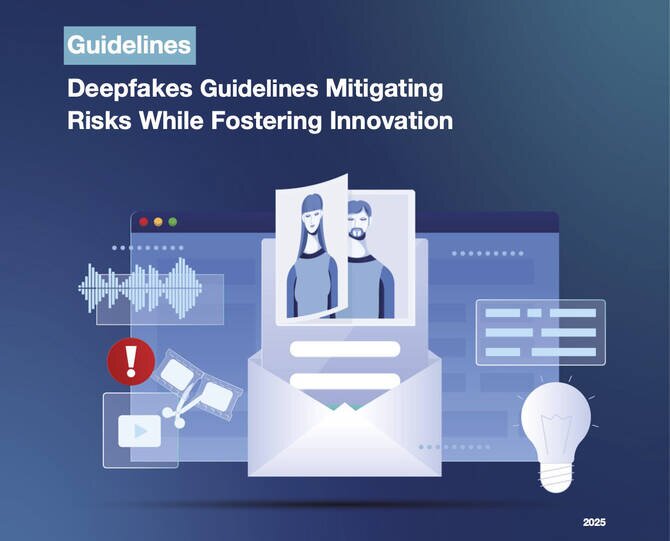
Riyadh: The Saudi Data and Artificial Intelligence Authority (SDAIA) has taken a significant step in addressing the growing issue of deepfakes by issuing 'Deepfakes Guidelines: Mitigating Risks While Fostering Innovation,' a regulatory document published under SDAIA-P119 in May 2025.
These guidelines provide a framework for managing the risks associated with hyper-realistic synthetic media that use deep learning techniques to manipulate audio, video, or digital content.
The publication categorizes deepfakes into positive applications and potential misuse scenarios.
Positive uses include marketing, entertainment, education, healthcare, retail, and cultural preservation.
However, it also highlights risks in impostor scams, non-consensual manipulation, and disinformation that can harm individuals and societies if used maliciously.
For developers of deepfake technology, the guidelines enforce compliance with data privacy laws such as Saudi Arabia's PDPL and international standards like GDPR and CCPA.
They are required to implement privacy-by-design principles, provide mechanisms for consent management, embed digital watermarks in synthetic content, maintain documentation of AI models, and use explainability features.
Content creators face strict obligations not to use deepfake services for fraudulent activities or defamation, and they must apply tamper-resistant watermarks to their work.
Explicit consent is required before using any individual's likeness, and consent records must be maintained securely.
The document calls on regulators to set up mechanisms for monitoring high-risk content while allowing more flexibility for educational material.
It also recommends a formal approval process for deepfake technologies, adoption of provenance standards like those from the C2PA coalition, enforcement of penalties for misuse, and public awareness campaigns.
For consumers, SDAIA provides a practical approach to detecting deepfakes through source assessment, analyzing audio-visual elements for inconsistencies, and authenticating content using AI-based detection tools.
Victims are advised to document evidence promptly and report incidents to relevant authorities or financial institutions.
The guidelines also emphasize the potential of deepfake technology when used responsibly, including enhancing communication for individuals with disabilities, creating educational resources, preserving cultural heritage, and advancing entertainment through digital character creation.
The full Deepfakes Guidelines document is available at https://sdaia.gov.sa/en/SDAIA/about/Files/File0001.pdf.
The document provides a comprehensive approach to managing the risks associated with deepfake technology while promoting innovation and responsible use.
These guidelines provide a framework for managing the risks associated with hyper-realistic synthetic media that use deep learning techniques to manipulate audio, video, or digital content.
The publication categorizes deepfakes into positive applications and potential misuse scenarios.
Positive uses include marketing, entertainment, education, healthcare, retail, and cultural preservation.
However, it also highlights risks in impostor scams, non-consensual manipulation, and disinformation that can harm individuals and societies if used maliciously.
For developers of deepfake technology, the guidelines enforce compliance with data privacy laws such as Saudi Arabia's PDPL and international standards like GDPR and CCPA.
They are required to implement privacy-by-design principles, provide mechanisms for consent management, embed digital watermarks in synthetic content, maintain documentation of AI models, and use explainability features.
Content creators face strict obligations not to use deepfake services for fraudulent activities or defamation, and they must apply tamper-resistant watermarks to their work.
Explicit consent is required before using any individual's likeness, and consent records must be maintained securely.
The document calls on regulators to set up mechanisms for monitoring high-risk content while allowing more flexibility for educational material.
It also recommends a formal approval process for deepfake technologies, adoption of provenance standards like those from the C2PA coalition, enforcement of penalties for misuse, and public awareness campaigns.
For consumers, SDAIA provides a practical approach to detecting deepfakes through source assessment, analyzing audio-visual elements for inconsistencies, and authenticating content using AI-based detection tools.
Victims are advised to document evidence promptly and report incidents to relevant authorities or financial institutions.
The guidelines also emphasize the potential of deepfake technology when used responsibly, including enhancing communication for individuals with disabilities, creating educational resources, preserving cultural heritage, and advancing entertainment through digital character creation.
The full Deepfakes Guidelines document is available at https://sdaia.gov.sa/en/SDAIA/about/Files/File0001.pdf.
The document provides a comprehensive approach to managing the risks associated with deepfake technology while promoting innovation and responsible use.