
Red Sea Coral Reefs Show Improvement Despite High Temperatures
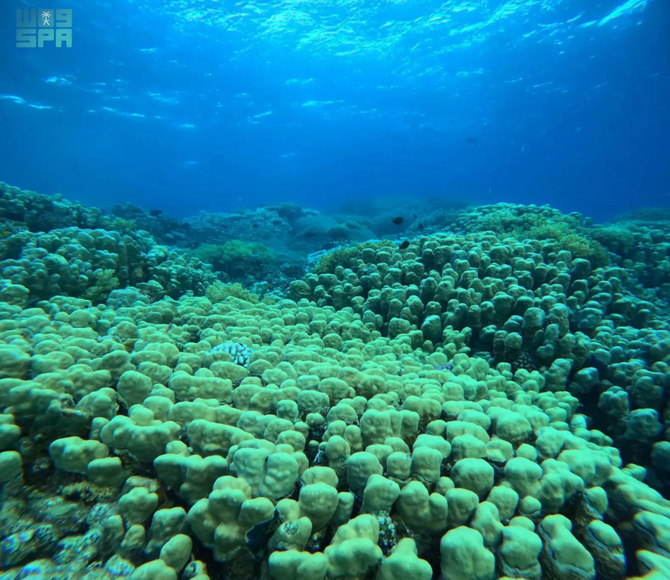
Researchers report promising results in coral health, with no severe bleaching or mass marine mortality observed.
Riyadh, Saudi Press Agency: Researchers have reported a notable improvement in coral reef conditions within the Red Sea, despite potential damage from high summer temperatures.
Field surveys conducted by the National Center for Wildlife (NCW) revealed encouraging results regarding coral health and overall ecosystem stability.According to the NCW, no cases of severe bleaching or mass marine mortality were observed, even amidst high temperatures.
This resilience is attributed to the success of national conservation efforts, highlighting Saudi Arabia's growing reputation in biodiversity management.
The Kingdom has been employing advanced remote sensing technologies and field instruments for monitoring the physical and chemical properties of the Red Sea's water.The program aimed to track human activities such as discarded fishing gear and marine waste to develop a comprehensive knowledge base that supports informed environmental planning.
By gathering data on these factors, the NCW seeks to achieve the objectives of its conservation initiatives, all in line with Saudi Vision 2030.
The results come from the second survey this summer, following an initial study conducted in April.In the earlier project, surveys were carried out across 64 locations along the coastline to assess the health status of various species.
The Red Sea hosts a diverse range of wildlife, including whales, dolphins, hammerhead sharks, and sea snakes.
Furthermore, it is home to the massive Pavona coral colony, which is expected to become an environmentally friendly tourist attraction managed by Red Sea Global in the future.
Field surveys conducted by the National Center for Wildlife (NCW) revealed encouraging results regarding coral health and overall ecosystem stability.According to the NCW, no cases of severe bleaching or mass marine mortality were observed, even amidst high temperatures.
This resilience is attributed to the success of national conservation efforts, highlighting Saudi Arabia's growing reputation in biodiversity management.
The Kingdom has been employing advanced remote sensing technologies and field instruments for monitoring the physical and chemical properties of the Red Sea's water.The program aimed to track human activities such as discarded fishing gear and marine waste to develop a comprehensive knowledge base that supports informed environmental planning.
By gathering data on these factors, the NCW seeks to achieve the objectives of its conservation initiatives, all in line with Saudi Vision 2030.
The results come from the second survey this summer, following an initial study conducted in April.In the earlier project, surveys were carried out across 64 locations along the coastline to assess the health status of various species.
The Red Sea hosts a diverse range of wildlife, including whales, dolphins, hammerhead sharks, and sea snakes.
Furthermore, it is home to the massive Pavona coral colony, which is expected to become an environmentally friendly tourist attraction managed by Red Sea Global in the future.