Saudi Press

Saudi Arabia and the world
Tuesday, Mar 03, 2026

More than a third of Hong Kong’s semi-private schools plan to increase tuitions

More than a third of Hong Kong’s semi-private schools plan to increase tuitions

However, most of the 80 schools will be freezing fees amid the economic downturn brought on by the Covid-19 pandemic.

More than a third of Hong Kong’s semi-private schools are planning to raise their tuition fees next year, with one proposing an increase of 15 per cent for its International Baccalaureate track.

However, most of the 80 direct subsidy scheme schools will be freezing fees for the 2021-22 school year to ease the burden on parents amid the economic downturn brought on by the ongoing Covid-19 pandemic.

Hong Kong’s schools were forced to suspend in-person classes for most of the past year because of the pandemic, with students spending many months learning from home.

Education Bureau figures released on Wednesday showed that 27 of the schools under the scheme – which are subsidised by the government, and occupy a middle ground between private and public – had applied to increase next year’s tuition fees as of May 7. Another 47 said they would freeze fees, while the rest had either not submitted their paperwork or had to make amendments.

Last year, 23 semi-private schools were granted permission to raise their fees by education authorities.

Though the bureau did not disclose the specific fee increases, spot checks by the Post of 14 semi-private schools found at least three were planning to raise their rates, subject to education officials’ approval.

The elite secondary institution Diocesan Boys’ School is proposing a 15 per cent increase for its International Baccalaureate diploma programme, with annual tuition rising from HK$102,000 to HK$117,300 (US$13,132 to US$15,102). Its local curriculum track may also see a 2.4 per cent increase, from HK$50,000 to HK$51,200.

The Diocesan Boys’ School’s primary division, meanwhile, is suggesting a 3.7 per cent fee increase, from HK$43,930 to HK$45,000.

A spokesman for the school said the proposed fee increases were for “refining the curriculum and upgrading classrooms” for interactive learning, adding parent representatives had been consulted, and a school-wide survey conducted beforehand.

HKBUAS Wong Kam Fai Secondary and Primary School said it was applying for a fee increase of no more than 2.5 per cent to “continuously improve teaching and learning quality”. Its current tuition fees range from HK$38,980 to HK$41,600 per year.

YMCA of Hong Kong Christian College, which is freezing fees for Forms Two through Six, proposed a tuition increase of about 6 per cent for its Form One students, from HK$48,000 to HK$51,000.

Principal Dion Chen, who is also chairman of the Hong Kong Direct Subsidy Scheme Schools Council, said Christian College had frozen fees for most students in an effort to help parents “ride out the difficult times”.

“Many schools have been more discreet when proposing fee adjustments,” Chen said.

He said the school was expecting to face more financial challenges because of the freeze, and hoped the government could increase subsidies for the schools.

Meanwhile, six semi-private schools run by the charitable organisation Pok Leung Kuk, as well as the Diocesan Girls’ School, Ying Wa Primary School, St Stephen’s College, St Paul’s Co-educational College and St. Paul’s Co-educational College Primary School, will be freezing all fees for next year.
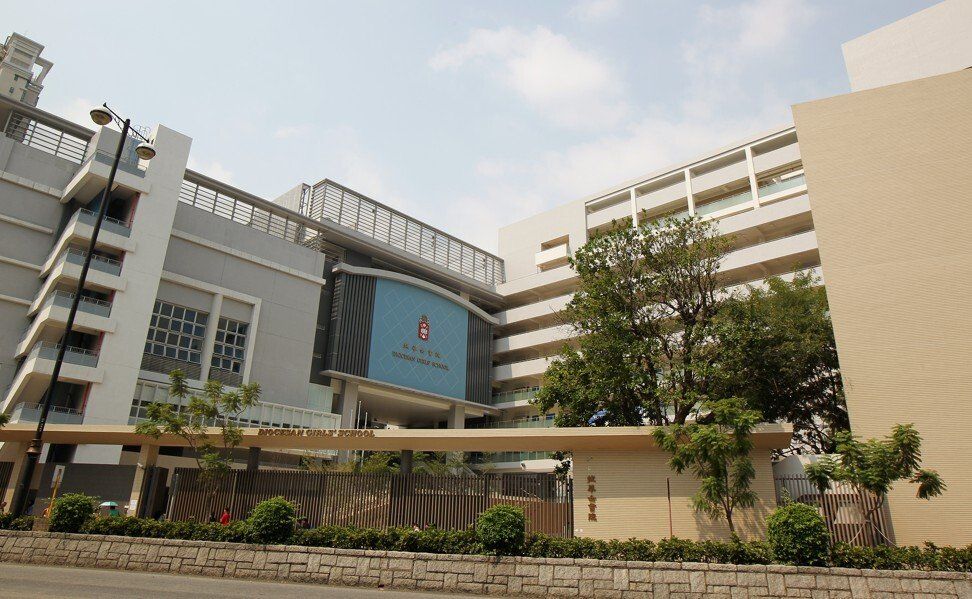
Diocesan Girls’ School in Jordan is among the schools freezing fees next year.


A spokesman for St. Paul’s said the decision was made last month “after much careful consideration and deliberation against the backdrop of the coronavirus pandemic and the unprecedented appalling economic conditions”.

An Education Bureau spokeswoman said officials would “carefully review the applications” submitted by schools, while also making sure they set aside at least 10 per cent of their total tuition fee income to support students with financial needs.

In March, Hong Kong’s biggest international school group, the English Schools Foundation, decided to freeze fees at its 22 schools for a second consecutive year, citing the “far-reaching consequences” of the pandemic-related economic slump for many families.

At least five private schools, including Christian Alliance International School and Stamford American School, have proposed fee increases of up to 4.9 per cent.

Newsletter

Related Articles

Saudi Press
0:00
0:00
Close
Imola Emerges as Standby Venue if Bahrain or Saudi Arabia Grands Prix Are Cancelled
Uncertainty Clouds $24 Billion Gulf Investment Linked to Paramount–WBD Deal
Middle East Strikes Disrupt Qatar LNG, Saudi Refining and Israeli Energy Fields
Gulf States Signal Possible Collective Action Over Iran’s Escalating Strikes
Saudi Arabia Summons Iranian Ambassador After Cross-Border Attacks
Saudi Arabia Intercepts Drones Targeting Ras Tanura Oil Refinery as Conflict Escalates
Saudi Arabia Clarifies It Supported Diplomacy With Iran, Not Military Escalation
Putin and Saudi Crown Prince Confer on Escalating Iran Crisis
Drone Strike Forces Shutdown of Saudi Arabia’s Largest Oil Refinery
Saudi Arabia Signals Harder Line on Iran as Regional Conflict Deepens
Strikes in Qatar and Saudi Arabia Pull Energy Infrastructure Deeper Into Expanding Middle East Conflict
U.S. and Israel Intensify Strikes on Iran as Conflict Expands to Lebanon and Gulf States
Violent Pro-Iranian Protesters Storm U.S. Consulate in Karachi
Missile Debris Sparks Fires at Dubai’s Jebel Ali Port Near Palm Jumeirah
Iran Strikes U.S. Fifth Fleet Headquarters in Bahrain Amid Wider Gulf Retaliation
Emerging Saudi–Turkish Alignment Draws Attention as Potential Strategic Challenge for Israel
Saudi Arabia Unveils $100 Billion Technology Investment Fund to Accelerate Post-Oil Diversification
US Lawmakers Question White House Consideration of Saudi Nuclear Enrichment Framework
Saudi Arabia Reaffirms Firm Commitment to Two-State Solution in Renewed Diplomatic Push
Saudi Arabia Launches Central Kitchen in Gaza to Deliver 24,000 Meals a Day
Saudi Arabia Announces $346 Million Support Package for Yemen in Renewed Humanitarian Push
Saudi Investors Increase US Equity Exposure Amid Domestic Market Weakness
Saudi Arabia Unveils Major Desert Gas Development in Strategic Shift Toward Diversified Energy Growth
Satellite Images Indicate Increased Aircraft Presence at Saudi Airbase Hosting US Forces
Telephone Diplomacy Sparks Tensions Between Two Key US Allies After Trump Intervention
Asian LPG Prices Surge After Damage Forces Saudi Aramco Export Disruptions
Saudi Arabia Unveils $100 Billion AI Infrastructure Fund to Challenge US and China
Saudi Stocks Close Lower as Tadawul All Share Index Falls 1.28 Percent
Saudi Arabia Launches Smart Mapping System to Enhance Pilgrim Experience at Holy Sites
Cristiano Ronaldo Acquires 25 Percent Stake in Saudi-Owned Spanish Club Almería
U.S.–Saudi Relations Balance Transactional Deal-Making with Expanding Strategic Ambitions
Israel’s President Herzog Signals Cautious Message on Saudi Ties at UAE Iftar in Tel Aviv
United States and Saudi Arabia Strengthen Security Ties with Joint Explosive Ordnance Disposal Exercise
Saudi Arabia Responds to Israel–UAE Moves in Somalia as Regional Rivalries Intensify
Saudi Arabia Showcases Expanding Defense Ambitions at World Defense Show 2026
SECRETARY RUBIO on IRAN: Iran poses a very great threat to the United States, and has for a very long time.
Larry Summers, the former U.S. Treasury Secretary, is resigning from Harvard University as fallout continues over his ties to Jeffrey Epstein.
U.S. stocks ended higher on Wednesday, with the Dow gaining about six-tenths of a percent, the S&P 500 adding eight-tenths of a percent, and the tech-heavy Nasdaq climbing roughly one-and-a-quarter percent.
Nvidia posted better than expected results for the January quarter on Wednesday and forecast current quarter revenue above market estimates.
Saudi Arabia’s Coffee Renaissance Gains Momentum as Investment and Heritage Drive Industry Growth
Saudi Shipping Leader Bahri Expands Fleet as Tanker Rates Approach $200,000 a Day
Saudi Arabia Advances First National Urban Policy Through High-Level Leadership and Institutional Alliances
Major Life Sciences Summits to Spotlight Saudi Arabia’s Rise as Regional Biotech and Pharma Hub
Saudi Arabia Reframes Red Sea and Horn of Africa Strategy Amid Rising Security and Trade Stakes
Saudi Arabia Recalibrates Its Role in Shifting Regional and Global Power Dynamics
Saudi Retail Signals to Global Brands: Localise or Lose Ground in a Rapidly Evolving Market
Saudi Arabia Looks to Human Capital Investment to Unlock Demographic Dividend
Saudi Arabia and Iran Increase Oil Exports Amid Escalating Middle East Tensions
Saudi Data Protection Authority Intensifies Enforcement Under Personal Data Law
Saudi Arabia Raises Oil Output and Exports Amid Contingency Planning Over Iran Tensions
×