How Aramco became synonymous with the time-tested Saudi-US partnership
The name “Aramco” is an acronym for Arabian-American Company. The pact between the two countries is like sand, consisting of individual particles gathered together in a vast, integrated collective.
To understand the current alliance between the countries through Aramco, requires a look back to the past.
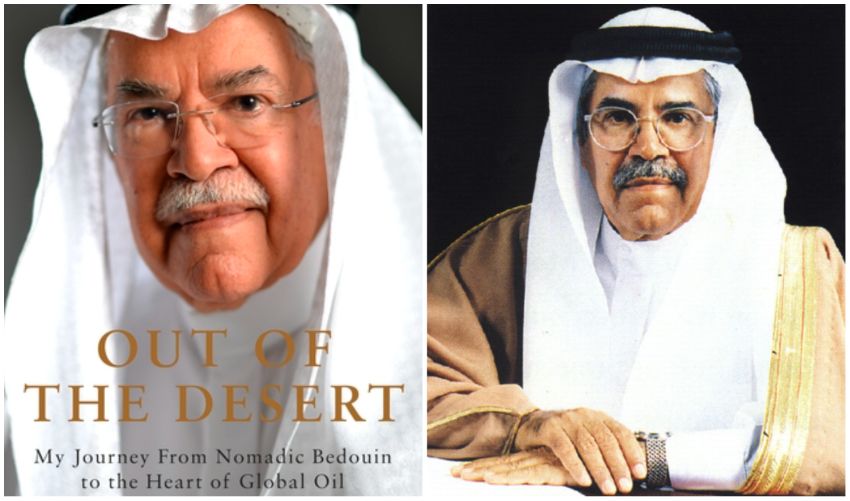 Ali Al-Naimi, who has been President and CEO of Aramco, was the Saudi
Arabian Minister of Petroleum and Mineral Resources from 1995 to 2016.
Ali Al-Naimi, who has been President and CEO of Aramco, was the Saudi
Arabian Minister of Petroleum and Mineral Resources from 1995 to 2016.
It started in 1933 when Standard Oil of California set up a new overseas exploration unit after signing a concession agreement with the Kingdom of Saudi Arabia. A subsidiary company, the California Arabian Standard Oil Company, was created to manage that agreement.
Ambitious and optimistic, but without any known track record, drilling began in the Saudi desert in 1935. Geologists had a hunch that they would find something there.
At the time, they used to scout areas in the sweltering Dammam heat and use their observation, and often just guestimates, to determine where to drill. They did so on six different occasions, finding nothing but expensive disappointment.
Then, in 1938, American geologist Max Steineke famously told his team to “keep on drilling.” He struck liquid gold on lucky number seven. That first viable oil well was affectionately named Dammam-7, or “Prosperity Well.” It is a name that is often still used fondly in Dhahran, where the Saudi Aramco headquarters is located.
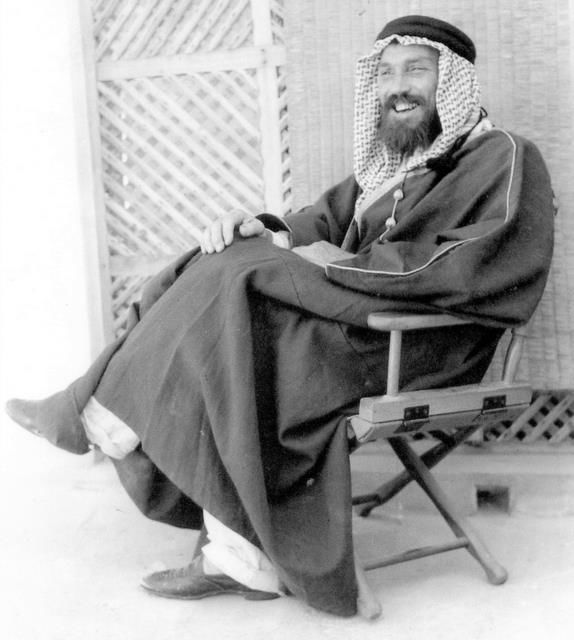 American geologist Max Steineke.
Fast-forward to this century, as the search for oil and gas became more challenging, the company turned to technology and the 2D seismic exploration program in the 1960s. With the advent of computational power from IBM and Cray in the 1990s and early 2000s, Aramco was able to deploy 3D seismic technology.
This allowed geoscientists to more accurately determine drilling locations from 3D images to create more complex and detailed views of the subsurface at depths of several kilometers. This resulted in an ever-increasing need for massive amounts of data like High Channel Count seismic surveys, and the development of advanced and complex computing power to process it all.
In the 1970s, the Saudi government gradually started to buy additional shares of the company, first 25 percent, then 60 percent, until they owned the company completely by 1980. In 1988, the Saudi Arabian Oil Company, or Aramco, was born and Ali Al-Naimi famously became the first Saudi president and CEO. Prior to that, all the presidents were American men. Many American expats still call Aramco home, and label its camp “Mini America.”
The company went public and was officially listed on the Saudi Stock Exchange (Tadawul) at the end of 2019, right before the COVID-19 pandemic hit.
With increased productivity and world-class technology, the company maintained one foot in America, by way of their subsidiary, Aramco Americas, located in another hot climate in Houston, Texas. Its official website states that it has several core services.
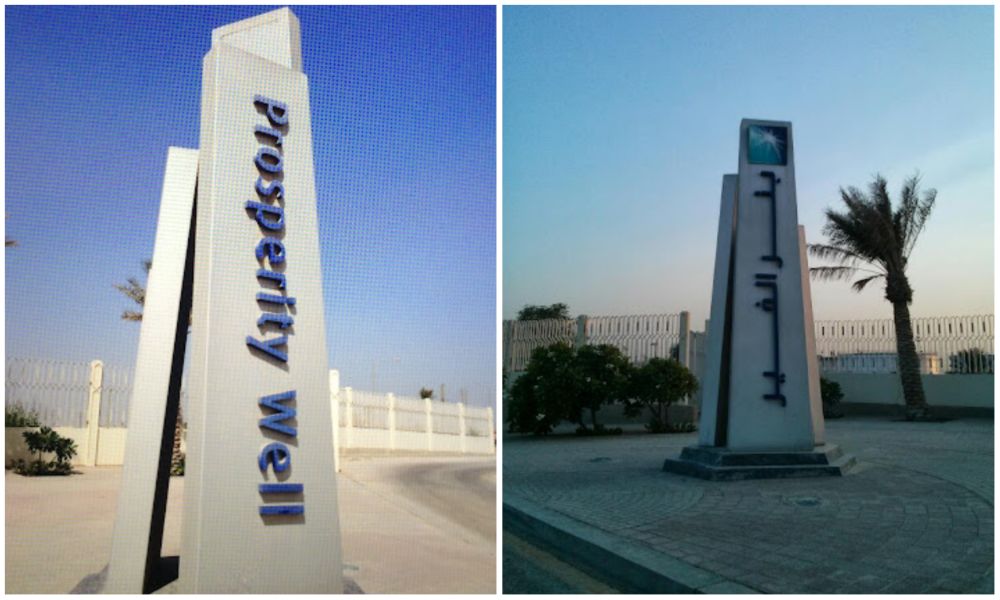 That first viable oil well was affectionately named Dammam-7, or
“Prosperity Well.” It is a name that is often still used fondly in
Dhahran, where the Saudi Aramco headquarters is located.
That first viable oil well was affectionately named Dammam-7, or
“Prosperity Well.” It is a name that is often still used fondly in
Dhahran, where the Saudi Aramco headquarters is located.
This includes managing a network of three US research centers and technology offices in Houston, Boston, and Detroit. In addition, it is tasked with identifying upstream and downstream technologies, best practices and potential technology partners for Saudi Aramco; and sourcing goods and services, including engineering services. A further task is the recruiting and training of Saudi Aramco-sponsored students and employees in North America.
Today, Aramco Americas wears many hard hats. Within that compound, they publish one of the oldest US-based magazines catering to English readers about the Arab and Muslim world.
Their award-winning, bi-monthly print magazine focuses on creating a cross-cultural understanding between the East and West. Their first issue was published in November 1949 with editors in different parts of the world.
The magazine rebranded as Saudi Aramco World in 2000 and renamed AramcoWorld in 2015. The editorial office settled in Houston in 1987, where it still churns out stories today. Their glossy print pages deliver to interested US addresses and to those Aramcons in Dhahran six times a year.
Constantly evolving, they now have a dedicated smartphone app, and an exhaustive photo archive in which 50,000 images can be searched. The print edition of AramcoWorld’s website states that it has some 35,000 subscribers in more than 125 countries.
Aramco Americas has been looking to diversify from oil and gas and to focus on vital areas such as sustainability and the environment. Recently, it initiated a project funded by the National Fish and Wildlife Foundation’s Coral Reef Conservation, in which efforts are being made to help rescue and rebuild important reefs in US and other coastal areas.