

Frenchwoman who killed abusive husband walks out free after sentencing
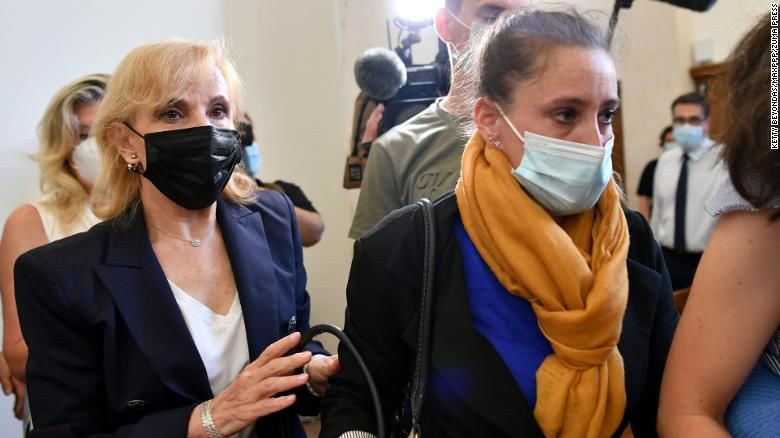
Valérie Bacot was sentenced to four years in prison, with three of those years suspended. She was released because she had already spent a year in prison, Bacot's lawyer, Nathalie Tomasini, said outside the Chalon-sur-Saone court in France.
"I would like to thank the court and all the support that I've had from everyone. Now is the time for a new fight for all the other woman and all the mistreatments," Bacot told journalists outside the courtroom.
Bacot said she was "not relieved, but rather emptied mentally and physically."
Bacot's lawyer said that "justice has been administered, we are particularly moved."
"This woman will go back to her children tonight, for me that is a huge victory," Tomasini added.
Bacot had admitted to shooting Daniel Polette in 2016. Polette had started raping her when she was only 12 or 13, according to court documents.
At that time he was her mother's boyfriend; he later became Bacot's husband and father of their four children. She previously referred to him as her stepfather before they married.
Earlier in court on Friday, Bacot fainted with apparent shock and relief after hearing the sentence sought against her by prosecutors would mean she would walk free. Bacot was potentially facing a life sentence for shooting Polette dead.
The prosecution has asked for a sentence of five years in prison, with four years of the term suspended, a lawyer for the accused said.
Tomasini told CNN's French affiliate BFM on Friday that she would "plead leniency" and was not expecting this "at all."
"Because she was in detention for a year, she would not be going back if the jury and the court follow the opinion of the prosecution," the lawyer added.
After Bacot fainted, emergency services attended to her in the courtroom in Chalon-sur-Saone, eastern France.
'Everyone knew'
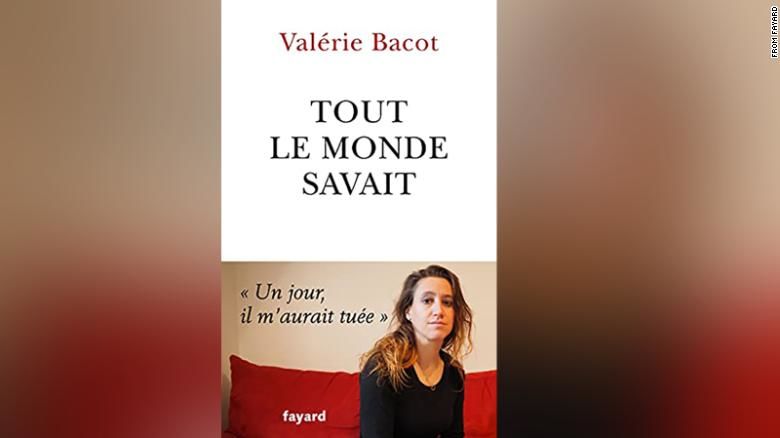
In her bestselling book "Tout Le Monde Savait" ("Everyone Knew"), published in May, Bacot, 40, said Polette, 25 years her senior, first raped her when she was 12 years old, impregnated her at 17 and went on to abuse her over the course of 18 years.
"I simply wanted to protect myself. Protect my life, the life of my children. In my eyes, nothing else ever mattered," she wrote in her autobiography.
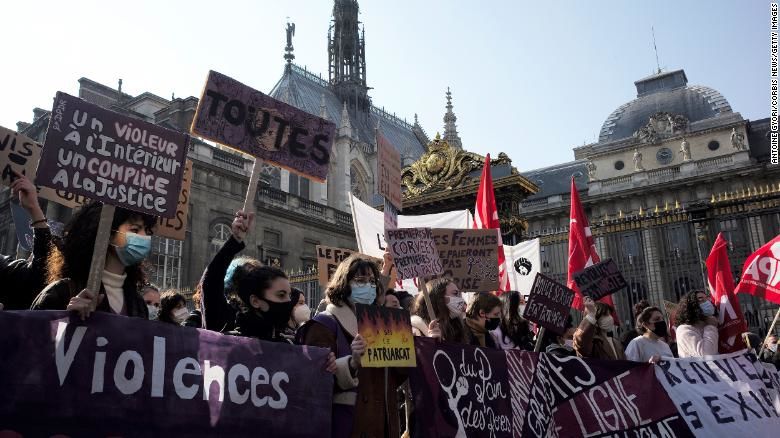
The trial has shone a light on the lack of support for victims of incest and domestic violence in France.
A petition seeking Bacot's freedom, launched by a support group in January, has gathered more than 715,000 signatures.
In her book, Bacot said she should be punished. But she argued that killing Polette was the only way to protect herself and her children from a man who had made her life "hell" from the time he first raped her until she shot him dead in 2016.
"I am not only a victim. I killed him; it is only normal that I should be punished. But if my sentence is heavy, that will mean to me that he had the right to behave the way he behaved with me," Bacot wrote.
This February, accusations of abuse from within a prominent French family prompted a national reckoning about incest in France, and legislative changes were made, including outlawing sex with children under the age of 15, and making incest when the victim is under 18 a crime of rape.
'Nobody said anything'
Everyone knew that Polette was violent, Bacot wrote in her book, in which she recounted how Polette, who was her mother's partner, abused her for years.
Bacot's mother Joëlle Aubague defended herself in court on Wednesday, saying it "all happened behind her back," Le Monde reported.
Polette even went to prison in 1995 for two and a half years for sexually assaulting a minor, Tomasini told CNN. Bacot was then around 15 years old.
During that period, Aubague took her daughter on prison visits, according to the book and to court hearings that were reported widely by French media.
"Bring her own daughter to prison, to see the man who raped her? This woman does not understand anything!" Polette's sister Mireille Polette exclaimed in court on Wednesday, according to French newspaper Le Monde.
Bacot's mother argued in court on Wednesday that Valérie "wanted to come, she was grown up, I wasn't the one forcing her," according to Le Monde.
"That way, she was also able to complete her hours of accompanied driving," Aubague added, to the court's surprise, Le Monde reported.
After his release, Polette was allowed to move back into the family home, where he continued to abuse her, Bacot wrote.
"Nobody seemed to find it bizarre that Daniel came back to live with us as if nothing had happened," Bacot wrote in her book.
"Everyone knew but nobody said anything," she added.
"I was naïve when I thought that, maybe, someone can be forgiven and given a second chance," Bacot's mother told the court on Wednesday, according to BFM.
Years of fear
Bacot became pregnant at the age of 17, and Polette installed her in a flat with him, according to court documents.
After several years of what she described as daily violence, Bacot wrote that Polette, a truck driver, forced her to prostitute herself in the back of his van.
Bacot wrote in her book that "fear froze my brain" after learning that she would have to prostitute herself. "Daniel owns me completely, I am an object that belongs to him, he can do whatever he wants with me," she wrote.
"One day he will kill me, it is written that way. I have known that ever since I was a kid, since my mother opened the doors wide before him."
According to court documents, a court-appointed psychiatrist said Bacot exhibited signs of major post-traumatic stress disorder and other characteristics of women in abusive relationships.
"She was always under Daniel Polette's tutelage, so she could not say anything," Tomasini told CNN earlier this week.
Indifference of society
Bacot's lawyers say she was let down by everyone around her.
A vulnerable teenager and young woman, she was "destroyed and devastated" by years of violence "but also, and above all, by the indifference and the omerta of society," her lawyers Janine Bonaggiunta and Tomasini wrote in the preface to the book.
The case shows "enormous failures in society and in the system that was meant to support victims of violence within the family, failures at the police level of course, but also from social services and from doctors," Tomasini told CNN.
Bacot tried to get help from the police, she said in her book. Unable to escape from Polette's surveillance, she asked her son and her daughter's boyfriend to go to the police. But she said they were twice turned away by gendarmes who said the case did not fall within their jurisdiction, and that Bacot had to come in person.
"After that, we decided not to do anything, to give up the fight. Anyway, no one is ready to listen. For us, there is no exit -- all is lost," she wrote.
According to court documents, none of the staff present at the police stations had any recollection of seeing them and no records were found. During court hearings reported by Le Monde, both her son and her daughter's boyfriend at the time insisted they went to the police, according to Le Monde.
Activists have long pointed out the lack of support systems for victims of incest and domestic violence in France. Isabelle Aubry, President of Face à l'Inceste, a French support group that has been fighting for legislative changes to protect victims of incest and family violence and which provides support for victims, says the onus is on them to seek out help.
"Instead of bringing care to victims of incest, a crime that will impact their entire lives and leave them with post-traumatic stress disorders, the state waits for them to ask for it," Aubry told CNN.
"But how could they? They are already incredibly vulnerable," she said.
Self defense claim
At the trial, Bacot said she became incredibly fearful when she heard that Polette had asked if their daughter Karline was sexually active, according to reports from journalists in court.
"Then, I became very afraid. Afraid that he would pimp her out. I knew that the more she would grow up, the more he would hurt her. And I did not know what to do," Bacot cried, according to journalists in court.
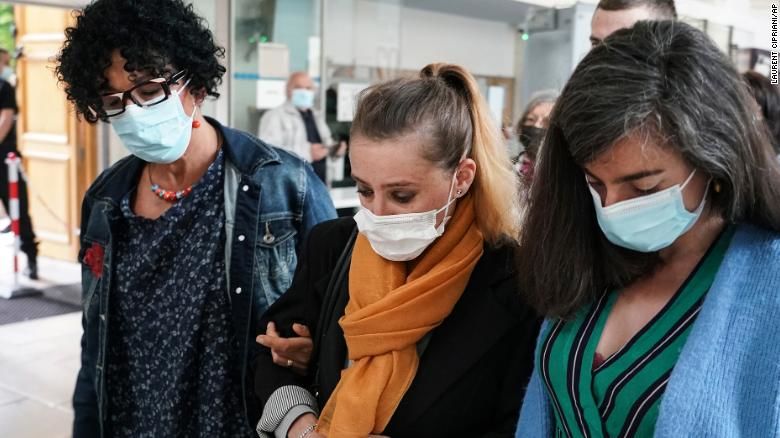
The prosecution "criticized Bacot for not having left her husband, for not having run away, they told her there were other solutions than killing her husband," Bonaggiunta told BFM on Monday.
"This is true, of course, but it was impossible for Valérie," the lawyer said.
According to legal expert Catherine Perelmutter, French law does not have specific clauses for battered women who kill their abusive husbands.
The defense has painted what Bacot did as an act of survival, but French law does not allow for her case to be considered in that light, according to court documents.
"Legally, the idea of legitimate (self) defense does not apply here, because the threat must be simultaneous (to the attack) and the response must be proportionate," Perelmutter explained.
"However, the circumstances are such that her judgment was altered, that she was not in her normal state. This could be taken into account ... all that she's been through might be taken into account," Perelmutter added.
A court-appointed psychiatrist said Bacot's judgment was severely altered by extreme PTSD, and that she acted "under the absolute certainty that only this action would allow her to protect her kids," according to court documents.
Bacot's lawyer Tomasini told CNN that, because she was in a state of "altered judgment," it could be argued that she had no other choice.
Popular support
A spokesperson for Bacot's support group, Florian Maïly, told CNN that support for Bacot started locally by word of mouth, but quickly expanded across France, and then Europe.
"At first, we were only a handful of people who wanted to help her," Maïly said, but then "we launched a petition that took off, especially as we were gaining attention from the media."
"I think that what touches people is that this is completely horrific. This story is really shocking and abnormal, but at the same time it touches upon the societal issues that we are aware of: incest, or MeToo, and others."
The case has echoes of that of Jacqueline Sauvage, a French woman sentenced to 10 years in prison after fatally shooting her abusive husband in 2012 -- just one day after their son took his own life. She was pardoned in 2016 by then-President Francois Hollande and freed from prison.
The two lawyers who are currently defending Bacot, Bonaggiunta and Tomasini, both represented Sauvage. They also aimed to paint the accused as a victim in the eyes of the public, according to media historian Claire Sécail.
"Public opinion has been won over, it has been for a long time," she told CNN.
"Although Bacot might be legally condemned, institutions cannot condemn her morally," Sécail said. "What she did has become almost insignificant compared to what she went through, which, in the eyes of public opinion, makes her the true victim."