
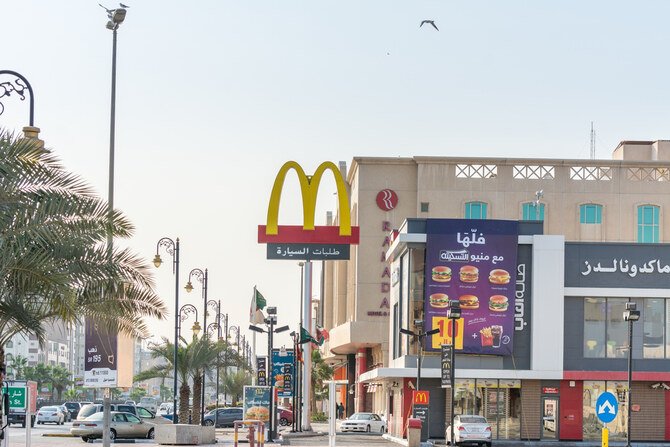
Franchises Drive Economic Growth in Saudi Arabia, Dominating MENA Market
Saudi Arabia now encompasses nearly half of the $30 billion franchise market in the Middle East and Africa, propelled by regulatory reforms and Vision 2030 initiatives.
The franchise sector is increasingly pivotal to the economic development of Saudi Arabia, contributing to job creation, government revenue, and cultural change in a nation with a predominantly young population.
Recent regulations have been instrumental in opening the market to international businesses and enhancing the ties between franchisors and franchisees.
Since the enactment of a franchise law in 2019, followed by expanded regulations in 2020, the Kingdom has carved out a substantial portion of the Middle East and Africa’s franchise market, which is valued at approximately $30 billion.
According to estimates, Saudi Arabia accounts for nearly half of this total.
Economic experts project a growth rate in franchise businesses of more than 20 percent annually over the next five years, driven by the wider economic reforms associated with Saudi Arabia's Vision 2030 initiative.
The number of franchise registrations in the Kingdom surged from 185 in late 2021 to 1,788 by the third quarter of 2024.
The accommodation and food services sector dominates these registrations, accounting for 1,232 entries, followed by wholesale and retail with 689, and transport and storage with 257.
Notably, Riyadh leads the region with 647 franchise registrations, trailed by Makkah at 363 and the Eastern Province at 225.
Estimates suggest that over 1,200 brands are available for franchising in Saudi Arabia, offering more than 10,000 business opportunities.
The Small and Medium Enterprises General Authority, known as Monsha’at, reports that the country hosts over 600 international and 380 local franchise brands.
Government efforts to create a business-friendly environment, alongside streamlined processes for small and medium-sized enterprises (SMEs), have contributed significantly to franchise sector growth.
The 2019 franchise law established a clearer legal framework that attracts both local and international investments.
This framework was complemented by executive regulations that facilitate operations and enhance transparency between franchisors and franchisees.
Insights from Abdullah Al-Maghlouth, a member of the Saudi Economic Association, emphasize that these developments have made the Saudi market increasingly attractive to investors.
Monsha’at’s Franchise Center actively promotes entrepreneurship through various initiatives, including the Tomoh program, which supports startups.
The Kingdom has also made strides in protecting trademarks, simplifying the registration process through an accessible online system.
Financial backing from the Kafalah program aids domestic investors seeking to finance franchise opportunities.
The Social Development Bank, which offers loans from SR150,000 ($40,000) to SR4 million for franchise development and expansion, continues to play a vital role in fostering the franchise ecosystem.
The establishment of the Saudi Franchise Association further complements these efforts, promoting a culture of business excellence and providing resources through seminars and partnerships.
Additionally, the Arab Franchise Marketing Corporation offers support in terms of legal services and marketing, assisting both domestic and international enterprises in navigating the franchise landscape.
Vision 2030’s emphasis on diversifying the economy and bolstering private sector involvement has significantly influenced the franchise market.
The national objectives aim to develop competitive industries, reduce reliance on oil revenues, and create job opportunities, elements critical for the upliftment of the franchise industry.
Investment in large-scale projects and sports initiatives has bolstered youth employment and increased demand for sectors such as education, health, dining, and fitness.
These dynamics have attracted both international franchise operators and local entrepreneurs.
Franchise potential in the Kingdom remains strong across several sectors, including food, retail, and health.
Educational franchises focusing on training, childcare, and tutoring appear particularly appealing to consumers.
The heightened focus on health-related offerings, including gyms and nutritious food franchises, aligns with increasing public interest in wellness.
The relaxation of social regulations for women and government support for local designers have further revitalized the retail landscape.
Emerging fields like technology and healthcare also present significant opportunities for franchise growth.
The supportive legal framework promises continued market transparency and positions Saudi Arabia as a premier investment landscape within the region.