
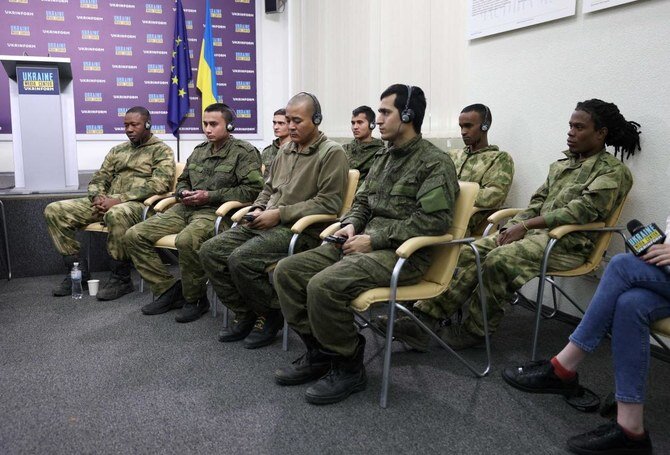
Eight POWs from Cuba, Nepal, Sierra Leone, and Somalia Share Tragic Tales of Being Deceived into Fighting for Russia
Eight prisoners of war from countries including Cuba, Nepal, Sierra Leone, and Somalia, who were captured by Ukraine, shared their stories of being tricked into fighting for Russia.
They claimed they were promised high wages, non-combat roles, or were deceived into joining.
Ukrainian officials labeled them as "mercenaries" from the "global South" and treated them similarly to Russian POWs.
The men spoke to journalists under guard, with the Geneva Convention stating POWs should be shielded from "public curiosity." AFP did not interview the men individually and chose not to reveal their names, but organizers did.
A 35-year-old Cuban man and a man from Sierra Leone shared their experiences of being unwittingly recruited for military service in Russia after responding to construction job offers on Facebook.
Both men expressed surprise and regret, with the Cuban man stating he hadn't anticipated joining a war.
A security guard from an unspecified country also shared similar experiences.
Petro Yatsenko, a spokesperson for a Ukrainian office dealing with prisoners of war, explained that Russia targets very low-income individuals, offering them high salaries and promising non-combat roles.
However, these individuals often end up being deployed to the front lines.
Russia is experiencing a shortage of mercenaries from the Wagner group and ex-prisoners for its military efforts in Ukraine, leading to an increase in the use of foreign fighters.
Some of these recruits willingly joined the army but were misled about their roles, with some believing they would be providing logistical or medical support.
Others were motivated by the promise of money.
A young Somalian man and a Nepalese man shared their reasons for joining, citing the desire for a better future and financial incentives, respectively.
The salaries promised to these recruits range from 250,000 rubles ($2,720) to $2,000 per month.
AFP reporters uncovered recruitment of Nepali and Indian citizens for combat roles in Ukraine through informal intermediaries and social media.
Applicants were promised non-combatant roles and permanent residence, but received weapons training and were deployed to the front line.
Nepal reported five prisoners of war and at least 12 deaths among its citizens.
Nepal banned citizens from working in Russia or Ukraine and asked for the return of recruits.
A Nepali prisoner in Kyiv, with war-inflicted burns, expected a "security guard" role but was misled into combat.
A Ukrainian official expressed concern over foreigners being lured by recruiters with promises of wealth to fight in the ongoing conflict.
These individuals are currently being detained in Ukraine and treated as Russian POWs.
Their status as mercenaries will be determined by the court.
Despite this, the Ukrainian authorities are interested in returning them to their home countries.
The individual in question was expressing his confusion and uncertainty about the situation.
Translation:
Translated by AI