

Dozens escape security crackdown, poverty in Lebanon to join ISIL
For Um Ibrahim, life has been sheer agony since her 19-year-old son, Ibrahim, disappeared a few months ago from their home in Tripoli in northern Lebanon.
The teenager, who was studying at a vocational institute to become an electrician, left his home in the densely populated Al-Qubba neighbourhood on an early Thursday in October last year.
When the family woke up, Ibrahim’s bed was empty, and he was nowhere to be found.
“The night before, Ibrahim was chatting away with his siblings. Everything seemed normal,” wept his mother.
When his phone would not pick up, the family reached out to Ibrahim’s closest friend – 20-year-old Osama – but he, too, did not respond to any calls or messages.
Hours later, Ibrahim’s family was shocked to learn that Osama had also disappeared from his home.
“That’s when my heart sank,” said Um Ibrahim. “I knew something was wrong.”
Disappointed to find the authorities had no answers to her questions about Ibrahim’s whereabouts, the family continued to search. Three weeks later, Um Ibrahim’s phone rang.
It was her son.
“Mama, I’m in Iraq, in an ISIL (ISIS) camp. I don’t know where it’s exactly, but I’m trying to come back. Please help me,” Um Ibrahim recounted the conversation.
The distraught mother told Al Jazeera she asked her son why and how he’d left.
“Apparently, he was told the security services were after him for alleged involvement in some terrorist activity, so he fled,” she said. “When I asked who helped him leave, the line cut.”
Um Ibrahim has not heard from her son since.
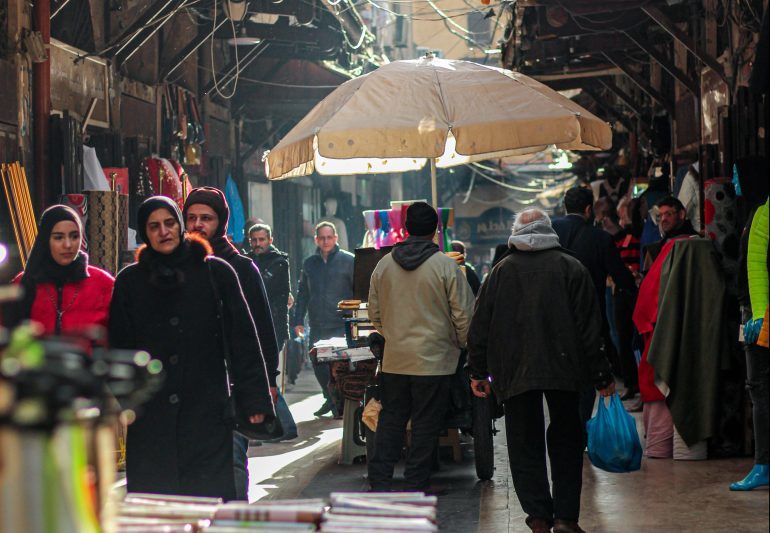 Tripoli, once hailed as the country’s industrial powerhouse, has become
the most impoverished city along the entire Mediterranean coast
Tripoli, once hailed as the country’s industrial powerhouse, has become
the most impoverished city along the entire Mediterranean coast
Tripoli in crisis
Ibrahim is among dozens of young men who have disappeared from Tripoli during the past few months and are suspected of joining the armed group in Iraq, according to security officials and Tripoli residents.
The young men’s sudden departures have left the city in shock and fear, with families and friends worried about their destinies and desperate to find out what happened. They say Lebanese authorities have done little to help.
As Lebanon’s second largest, the port city of Tripoli was once hailed as the country’s industrial powerhouse. But in recent years, it has become the most impoverished city along the entire Mediterranean coast.
A deepening economic meltdown in Lebanon – ranked by the World Bank as likely one of the worst since the mid-19th century – has lost the Lebanese pound more than 90 percent of its value since 2019 and sent food prices skyrocketing by more than 600 percent.
But even before the economic crisis set in, Tripoli’s poverty rate was almost 60 percent, according to UN estimates. Thousands of families are unable to afford basic needs – especially across the most deprived neighbourhoods – Bab al-Tabbaneh, al-Qubba, and al-Mina.
At the same time, authorities have cracked down on the city after assailants in Tripoli launched attacks against Lebanon’s army in 2014 in its most serious bout of violence.
For years, Tripoli has been known as a city of conflict, a hotbed of “extremism” and a symbol of sectarian and political rifts in Lebanon.
Dozens of people were killed in suicide bombings during the Syrian war as clashes intensified between those who support the government of Bashar al-Assad and Hezbollah’s involvement with it, and those who oppose it.
 Thousands of families are unable to afford basic needs – especially
across the most deprived neighbourhoods of Bab al-Tabbaneh, Al-Qubba,
and Al-Mina
Thousands of families are unable to afford basic needs – especially
across the most deprived neighbourhoods of Bab al-Tabbaneh, Al-Qubba,
and Al-MinaHeartbroken mothers
On New Year’s Eve, another man from Tripoli, Alaa, 29, also disappeared from his home.
Alaa was arrested on terrorism charges along with two of his brothers five years ago and sent to Roumieh prison – a detention centre known for being one of the worst in the region.
Since his release in 2019, Alaa has been unemployed and struggled with his mental health, said his mother.
“He couldn’t find work because he’d been to prison and he was haunted by what he’d seen in jail,” said Um Alaa.
Days before his disappearance, Alaa confided in her that a member of the security services told him he was wanted for interrogation and would soon be arrested again.
“I tried to calm him down, telling him that he hadn’t committed any crime,” said Um Alaa.
But within days, Alaa had disappeared without a trace. His mother said Lebanese security services informed the family that Alaa had crossed the Syrian border into Iraq and joined ISIL.
Before the mother could digest the horrific news, even worse developments came her way.
On Sunday, Iraqi air raids killed nine suspected ISIL fighters in Al-Azim district outside Baqouba, north of Baghdad, in retaliation for an attack by the group on Iraqi army barracks that killed 11 soldiers last month.
Iraqi security officials said four of those killed were Lebanese natives of Tripoli, while Lebanese media put the death toll at six Lebanese men, naming several of them and quoting family members in Tripoli.
Um Alaa, whose son had called a week earlier – the first time since his disappearance, was devastated to learn from footage and images sent by an unknown caller in Iraq that her son was among those killed.
“When Alaa called, he asked about my health and told me that he was in Iraq, but didn’t disclose anything else,” she cried.
“I’m heartbroken. He saw so much injustice,” said his mother as she appealed to Lebanese authorities to return his body. “He was preparing to get married. Now, he’s gone.”
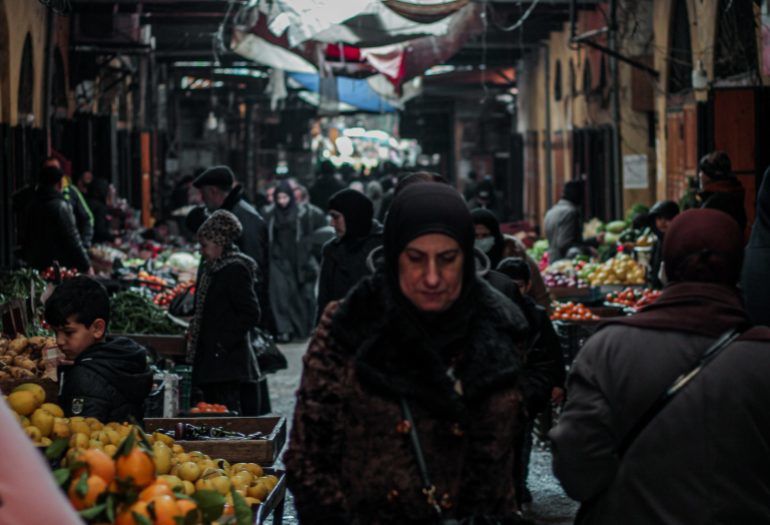 Several mothers in Tripoli told Al Jazeera their sons have disappeared during the past few months, only to reappear in Iraq
 Security investigation
Al Jazeera spoke to several other families who reported similar events. Ahmed Noureddine, a father from Bab al-Tabbaneh neighbourhood in Tripoli, reported his 28-year-old son Mohammed disappeared in January despite having a wife and two sons.
While Mohammed has not been heard from since, one mother of a 22-year-old who was studying engineering at the Lebanese University said her son also disappeared from Tripoli last month and reached out to inform her he was now in Iraq.
According to a source at the Ministry of Interior, 48 young men have left Tripoli since October last year and are suspected of joining ISIL in Iraq.
The source, who requested anonymity because he was not authorised to speak to the media, said an investigation was under way in conjunction with the Iraqi security services.
He added Lebanon’s Interior Minister Bassam Mawlawi, who is due to visit Iraq in mid-February, is expected to discuss the matter with his Iraqi counterpart.
Al Jazeera contacted the Lebanese security services and army intelligence unit, but they refused to comment on the matter.
Meanwhile, a security source who spoke to Al Jazeera on condition of anonymity, said the Lebanese security services were in the process of interrogating a Lebanese man involved in recruiting Tripolians to join ISIL.
According to the source, the interrogation has so far revealed that promises of work opportunities and money lured many of the young men to Iraq.
“Some were promised salaries of up to $2,000, while others were told they could get employment for around $700 upon their arrival and joining ISIL,” said the source.
 Ahmed Noureddine’s son, Mohamed, disappeared from their home in Bab
al-Tabbaneh neighbourhood in Tripoli last month, and he has not been
heard from since
Ahmed Noureddine’s son, Mohamed, disappeared from their home in Bab
al-Tabbaneh neighbourhood in Tripoli last month, and he has not been
heard from sinceISIL resurgence, underlying causes
The revelations come amid mounting evidence of a resurgence of ISIL in Syria and Iraq, nearly three years after the armed group lost the last patch of territory in its so-called caliphate.
Last week, ISIL fighters launched a deadly attack on the Kurdish-held Ghweyaran prison housing thousands of former ISIL fighters in Hassakeh, Syria, while a series of attacks have targeted military forces in neighbouring Iraq in recent months.
The recruitment of young men from Tripoli to join armed groups is not a new phenomenon, said Khaldoun al-Sharif, a Lebanese political analyst and former government adviser.
“Even though extremist ideology exists in Tripoli, it’s limited to a small number of people,” said al-Sharif.
“The real reasons behind the phenomenon is growing poverty, unemployment, lack of basic services, and the state’s crackdown using arbitrary arrests and false accusations to round up young men in Tripoli. That’s given an opportunity for militant groups to recruit in Tripoli,” he added.
Muhammad Sablouh, a Lebanese lawyer who specialises in counterterrorism and security, agreed.
“There are clear efforts to lure and recruit young men to join the group,” said Sablouh. “Tripoli wants to remain Lebanon’s second capital, but the state has been dealing with its people as a source of violence and extremism.”
According to Salbouh, Lebanese security services have documented 11,000 cases of suspected terrorism among Tripolians, and used them to launch arrest warrants and interrogations, despite a lack of concrete evidence to back up the allegations.
“Young men in Tripoli are constantly summoned by the police, arrested and referred to military courts,” he told Al Jazeera. “That’s left a deep sense of injustice among them.”
For Um Ibrahim, the details do not add up regardless.
“Ibrahim was struggling to make a future for himself – just like hundreds of young boys in this city,” said Um Ibrahim. “What’s happening tears me apart. I’m simply in shock.”
 Poverty, unemployment, lack of basic services, and the state’s crackdown
on young men in Tripoli has given an opportunity for armed groups to
find recruits in the city, experts say
Poverty, unemployment, lack of basic services, and the state’s crackdown
on young men in Tripoli has given an opportunity for armed groups to
find recruits in the city, experts say