Saudi Press

Saudi Arabia and the world
Tuesday, Jan 13, 2026

Cryptocurrency key terms: A guide to making sense of digital money

Cryptocurrency key terms: A guide to making sense of digital money

What's the difference between altcoins and stablecoins? What's hashing and mining? Sometimes the jargon around cryptocurrencies can make your head spin. Here's how to make sense of it all.

As with any new technology, cryptocurrency comes with its own jargon. For the uninitiated, this can be confusing, even intimidating, at first glance.

If you’re looking to buy, invest or trade in cryptos, a grasp of the most commonly used terms will go a long way to help you understand how blockchain and cryptocurrencies work.

Here are just some of the key terms you will come across:

Bitcoin


Bitcoin was invented in 2008 by a mysterious person or group named Satoshi Nakamoto. While it is now one of thousands of cryptocurrencies, it continues to hog the limelight as the first ever crypto.

Altcoin


"Alt" being short for alternative, altcoin is a term which applies to cryptocurrencies that aren’t Bitcoin and which followed in the wake of its launch.

Stablecoin


While Bitcoin and other altcoins are decentralised, stablecoins are pegged to something else of value, be it an existing currency like the US dollar, or a commodity, in order to make them less volatile.

Ethereum


Ethereum is an open-source, blockchain-based software platform that has its own cryptocurrency called ether. Much like Bitcoin, there are terms that are specific to dealing with Ethereum, including Solidarity, a coding language invented by the platform which is similar to JavaScript.

Non-fungible token (NFT)


While cryptos are fungible, meaning they can be exchanged on a one-to-one basis, NFTs are not interchangeable as they are of different values. NFTs are a form of cryptocurrency which hold assets like music and art rather than money.

Cryptography


The study of secure communications in which the sender and recipient are the only ones who are able to see a message. It’s the basis for blockchain technology used in cryptocurrency transactions.

Fiat currency


Fiat currencies are ones that are issued by governments or banks, but are not backed by a commodity, such as gold. Most modern paper currencies we use today are fiat currencies.

Commodity currency


Unlike fiat currencies, commodity currencies are linked to commodities such as gold, and fluctuate based on the world market value of those products or materials.
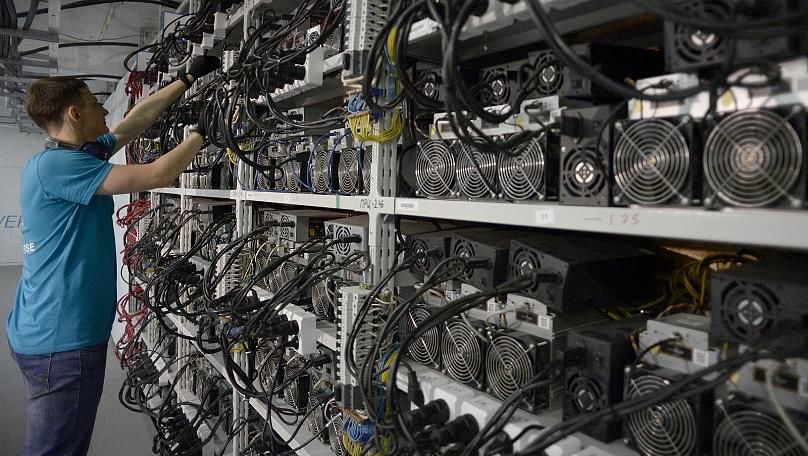
An employee inspects machines for the production of bitcoins at a mining centre.


Decentralised finance


Also known as DeFi, decentralised finance is the notion that crypto entrepreneurs can recreate a financial system outside the control of the government and traditional financial institutions like banks and brokerages using blockchain technology.

Blockchain


A block is one record of transaction data. Once a transaction is completed, it goes into the blockchain, which is a network of blocks that act as a public ledger that keeps a record of transactions, much as a bank would.

For every transaction, a new block is generated and added to the blockchain. Each block contains a mathematical puzzle with a unique answer which needs to be solved before it can be added to the blockchain. The more blocks that are added, the more secure the blockchain becomes.

Hashing


Hashing is the process of using a function or algorithm to encrypt and decrypt the data in each block. The hash code - or simply hash - can be used as a way of narrowing down the search for data when trying to validate each new block, known as mining.

Mining


The process of finding new coins and validating them for rewards, mining involves supercomputers to unlock blocks by solving - or "hashing" - the complicated mathematical puzzles within each one.

Mining rig


A rig is a computer specifically designed and used to mine for blocks.

Public key


This is the publicly available code that you share with people to receive cryptocurrency into your account.

Private key


This is the confidential code which you use to access your wallet where your cryptos are stored. Only you should have access to this. If someone else finds this key, your stored cryptos are vulnerable to theft.

Whale


As the name suggests, whales are players in the cryptocurrency pond who own large amounts of cryptos. By moving large amounts of cryptos in a sale or purchase, whales have the ability to significantly impact the market, so traders try to keep track of their activities.

Wallet


As with other terms, this is borrowed from our everyday financial vocabulary. Just as with fiat currencies, cryptos are stored in a virtual wallet to keep them safe.

Cold storage


Often regarded as more secure than a wallet, cold storage entails storing bitcoins offline in a device known as a hardware wallet. Owners tend to use both - a wallet for regular spending and cold storage for savings.

Paper wallet


A form of cold storage, a paper wallet is the printed version of your public and private keys on paper in the form of QR codes.

Satoshi or "sat"


As with physical currencies, Bitcoin comes in denominations. A Satoshi - named after Bitcoin’s creator - is the smallest denomination of this particular crypto, equating to 100 billionth of one Bitcoin.

Newsletter

Related Articles

Saudi Press
0:00
0:00
Close
Trump Designates Saudi Arabia a Major Non-NATO Ally, Elevating US–Riyadh Defense Partnership
Trump Organization Deepens Saudi Property Focus with $10 Billion Luxury Developments
There is no sovereign immunity for poisoning millions with drugs.
Mohammed bin Salman’s Global Standing: Strategic Partner in Transition Amid Debate Over His Role
Saudi Arabia Opens Property Market to Foreign Buyers in Landmark Reform
The U.S. State Department’s account in Persian: “President Trump is a man of action. If you didn’t know it until now, now you do—do not play games with President Trump.”
CNN’s Ranking of Israel’s Women’s Rights Sparks Debate After Misleading Global Index Comparison
Saudi Arabia’s Shifting Regional Alignment Raises Strategic Concerns in Jerusalem
OPEC+ Holds Oil Output Steady Amid Member Tensions and Market Oversupply
Iranian Protests Intensify as Another Revolutionary Guard Member Is Killed and Khamenei Blames the West
President Trump Says United States Will Administer Venezuela Until a Secure Leadership Transition
Delta Force Identified as Unit Behind U.S. Operation That Captured Venezuela’s President
Trump Announces U.S. Large-Scale Strike on Venezuela, Declares President Maduro and Wife Captured
Saudi-UAE Rift Adds Complexity to Middle East Diplomacy as Trump Signals Firm Leadership
OPEC+ to Keep Oil Output Policy Unchanged Despite Saudi-UAE Tensions Over Yemen
Saudi Arabia and UAE at Odds in Yemen Conflict as Southern Offensive Deepens Gulf Rift
Abu Dhabi ‘Capital of Capital’: How Abu Dhabi Rose as a Sovereign Wealth Power
Diamonds Are Powering a New Quantum Revolution
Trump Threatens Strikes Against Iran if Nuclear Programme Is Restarted
Why Saudi Arabia May Recalibrate Its US Spending Commitments Amid Rising China–America Rivalry
Riyadh Air’s First Boeing 787-9 Dreamliner Completes Initial Test Flight, Advancing Saudi Carrier’s Launch
Saudi Arabia’s 2025: A Pivotal Year of Global Engagement and Domestic Transformation
Saudi Arabia to Introduce Sugar-Content Based Tax on Sweetened Drinks from January 2026
Saudi Hotels Prepare for New Hospitality Roles as Alcohol Curbs Ease
Global Airports Forum Highlights Saudi Arabia’s Emergence as a Leading Aviation Powerhouse
Saudi Arabia Weighs Strategic Choice on Iran Amid Regional Turbulence
Not Only F-35s: Saudi Arabia to Gain Access to the World’s Most Sensitive Technology
Saudi Arabia Condemns Sydney Bondi Beach Shooting and Expresses Solidarity with Australia
Washington Watches Beijing–Riyadh Rapprochement as Strategic Balance Shifts
Saudi Arabia Urges Stronger Partnerships and Efficient Aid Delivery at OCHA Donor Support Meeting in Geneva
Saudi Arabia’s Vision 2030 Drives Measurable Lift in Global Reputation and Influence
Alcohol Policies Vary Widely Across Muslim-Majority Countries, With Many Permitting Consumption Under Specific Rules
Saudi Arabia Clarifies No Formal Ban on Photography at Holy Mosques for Hajj 2026
Libya and Saudi Arabia Sign Strategic MoU to Boost Telecommunications Cooperation
Elon Musk’s xAI Announces Landmark 500-Megawatt AI Data Center in Saudi Arabia
Israel Moves to Safeguard Regional Stability as F-35 Sales Debate Intensifies
Cardi B to Make Historic Saudi Arabia Debut at Soundstorm 2025 Festival
U.S. Democratic Lawmakers Raise National Security and Influence Concerns Over Paramount’s Hostile Bid for Warner Bros. Discovery
Hackers Are Hiding Malware in Open-Source Tools and IDE Extensions
Traveling to USA? Homeland Security moving toward requiring foreign travelers to share social media history
Wall Street Analysts Clash With Riyadh Over Saudi Arabia’s Deficit Outlook
Trump and Saudi Crown Prince Cement $1 Trillion-Plus Deals in High-Profile White House Summit
Saudi Arabia Opens Alcohol Sales to Wealthy Non-Muslim Residents Under New Access Rules
U.S.–Saudi Rethink Deepens — Washington Moves Ahead Without Linking Riyadh to Israel Normalisation
Saudi Arabia and Israel Deprioritise Diplomacy: Normalisation No Longer a Middle-East Priority
Saudi Arabia Positions Itself as the Backbone of the Global AI Era
As Trump Deepens Ties with Saudi Arabia, Push for Israel Normalization Takes a Back Seat
Thai Food Village Debuts at Saudi Feast Food Festival 2025 Under Thai Commerce Minister Suphajee’s Lead
Saudi Arabia Sharpens Its Strategic Vision as Economic Transformation Enters New Phase
Saudi Arabia Projects $44 Billion Budget Shortfall in 2026 as Economy Rebalances
×