

The London stock market has a new giant and it's a business worth keeping an eye on
Overnight, a giant new company has arrived on the London stock market.
Shares of Woodside Energy, based in the western Australian city of Perth, were admitted to the main list and enjoyed a healthy first day premium, rising from the opening price of 1800p to as high as 1992.8p by lunchtime.
The company has a valuation of just under £36bn at the current price.
Woodside may not be a household name in the UK but it certainly is in Australia.
Founded in 1954 as an oil company and taking its name from the Victoria town near its leases, it was a pioneer in offshore oil exploration, setting world records for the depths to which it drilled below the south Australian seabed.

It continued as a specialist offshore oil and liquified natural gas producer for subsequent decades, during which, its partners Shell and BHP - the Australian mining giant - each became 40% shareholders.
Shell, in fact, tried to buy out other shareholders with a $10bn takeover bid that was blocked in 2001 by the Australian government. Both it and BHP subsequently sold down their shareholdings.
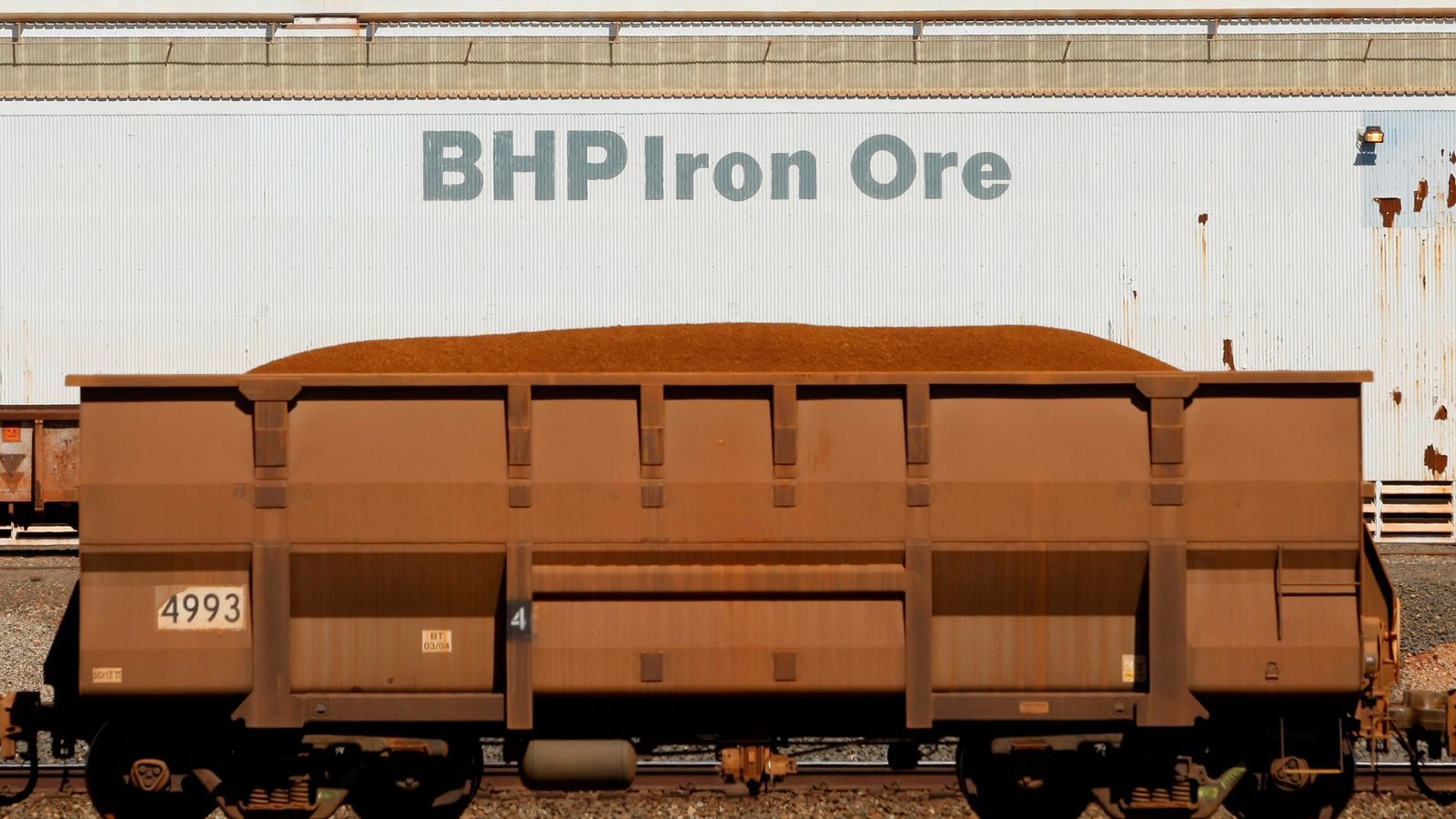
Fast forward to last year when BHP, which had previously offloaded its US shale assets, announced that it would be abandoning its dual-listing structure and moving its main stock listing to Australia - giving up its status as the biggest company in the FTSE 100 in the process.
The announcement was accompanied by news that BHP, which had itself sought to buy Woodside in the past, would be selling its remaining oil and gas assets to Woodside.
That deal completed on Wednesday last week and, in the process, created one of the world's biggest 10 independent energy companies by hydrocarbon production.
Meg O'Neill, Woodside's chief executive, said: "Today, Woodside begins its journey as a global company, becoming a bigger supplier of the energy that the world needs right now and will continue to demand in the future."
"The merger delivers a diverse portfolio of quality operating assets, plus a suite of growth opportunities across oil, gas and new energy that promises ongoing value for our shareholders.
"We believe the completion of the merger will enable Woodside to play a more significant role in the energy transition that is imperative as we respond to climate change while ensuring reliable and affordable supplies of energy to a growing and aspirational global population."
With shareholders of BHP emerging with 48% of the enlarged business, it means many UK investors will now have a shareholding in Woodside.
So, what are they getting?
As one might expect, Woodside's assets are heavily skewed to Australia, including Pluto, which takes gas from the offshore Pluto and Xena gas fields in western Australia and converts it to liquified natural gas (LNG), much of which is shipped on to customers in Japan.
It also owns just over one third of North West Shelf, just off the north west coast of the country, the giant natural gas project which is reckoned to be Australia's biggest ever resource project and where Woodside first partnered with Shell - a fellow shareholder - back in 1971.
The company's current biggest growth project is currently the Scarborough gas field off the coast of western Australia.
Further afield, Woodside also owns stakes in the Angostura oil and gas field off the coast of Trinidad, the Shenzi oil and gas field off the coast of Louisiana in the Gulf of Mexico, where it is also a minority shareholder in Mad Dog and Atlantis, oil and gas fields both operated by BP.
There is also an interest in the Sangomar oil field in Senegal which, according to Ms O'Neill, is a grade ideally suited to replacing the Russian crude that will shortly no longer be reaching European refineries.
Woodside is also in the process of building up non-oil and gas projects as, in common with the likes of BP and Shell, it seeks to pivot away from hydrocarbons.
It has invested in three separate hydrogen and ammonia projects in Perth, Tasmania and Oklahoma and in solar projects in California and in western Australia.
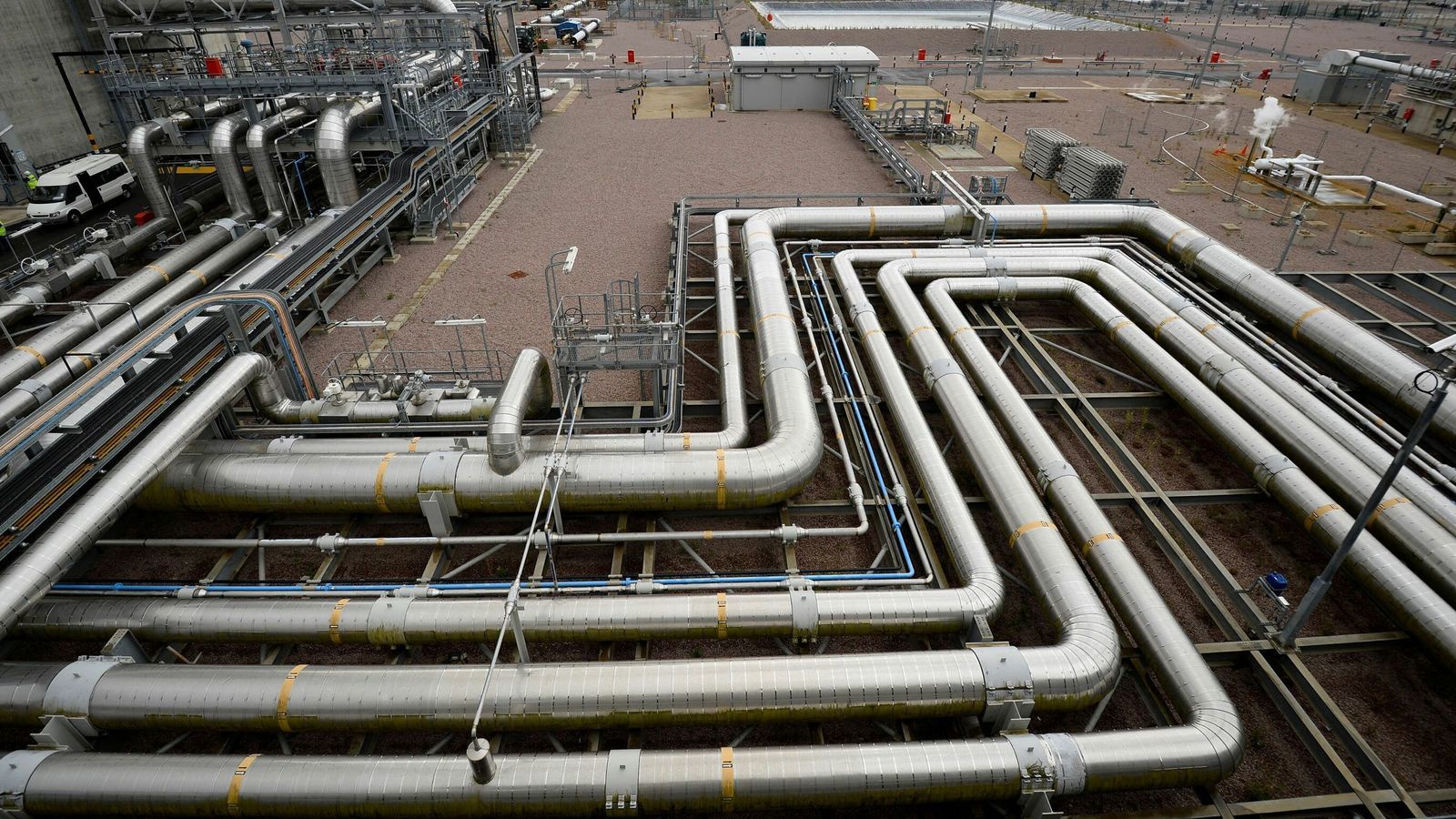
The rationale for the merger was that the enlarged Woodside group would be more geographically diverse, with 15% of its operations in the US Gulf of Mexico and 5% in Trinidad and Tobago and more diverse in terms of its products, with 29% of production coming from oil and condensate.
Essentially, though, this is an investment in the LNG sector. LNG still makes up 46% of combined production in the new group.
And that makes it a more interesting investment play than it was at the beginning of the year.
Russia's invasion of Ukraine has spurred determination in many countries to wean themselves off Russian gas - and, for many of them, that means buying LNG, a commodity in which Australia is the world's biggest producer by volume, just ahead of Qatar and the United States.
Even before the war on Ukraine, global LNG demand was being predicted to more than double in volume between 2021 and 2050, reflecting declining gas production in Europe and parts of Asia.
Australia, thanks to its existing long-term supply deals with many Asian customers, was already thought likeliest to benefit from that increase in demand.
The question for investors is whether much of this is already priced in.
Woodside's Australian shares have already risen in value by 45% since the beginning of the year but much of the share price strength has been in the last couple of weeks and may reflect the fact that a number of Sydney investors who had previously 'shorted' Woodside stock - selling ahead of the big share issue made by the company for BHP's petroleum business - have recently been buying to close those positions.
So a lot of the value may already be in the Woodside share price. This will, nonetheless, be a business worth keeping an eye on.