
Tabuk's Transformative Economic Landscape: A Hub of Growth and Innovation in Saudi Arabia
Tabuk emerges as a vital region for investment and development, driven by diverse sectors and ambitious government initiatives.
Tabuk is positioning itself as one of Saudi Arabia's most vibrant regions, fueled by a youthful workforce, increasing demand, and an array of attractive tourist offerings.
In March 2024, Mayor Hussam bin Muwafaq Al-Youssef detailed the investment potential of the area, revealing more than 120 available investment projects spanning various sectors, including manufacturing, agriculture, mining, energy, and tourism.
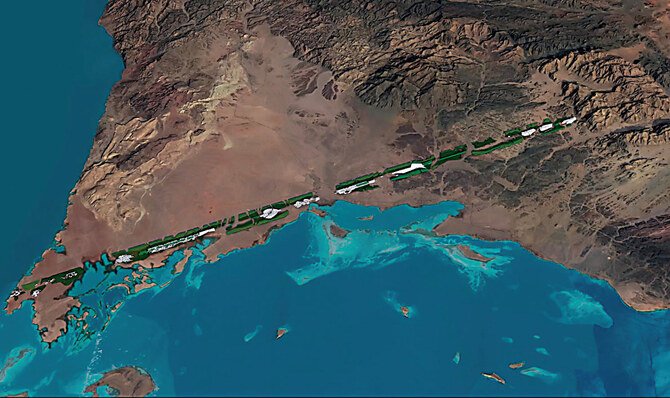
Al-Youssef’s remarks came on the heels of significant developments in Tabuk's business environment, including the much-anticipated launch of Sindalah island as part of the NEOM initiative and the inauguration of Nujma, a Ritz-Carlton Reserve at the Red Sea.
Global engagement in the region has also been heightened, with events such as the Tabuk Toyota Rally underscoring Tabuk's growing prominence.
Corresponding improvements in infrastructure were noted, particularly the upgrade of Tabuk's airport, which saw a 25 percent increase in flight operations.
Nicholas Nahas, a partner at Arthur D. Little, Middle East, noted the positive strides made in raising Tabuk’s business profile through expanded industrial activity and upgraded leasing agreements.
He emphasized the critical role of Proximity to major mega-projects such as NEOM, Amaala, and the Red Sea in enhancing commercial and touristic prospects.
The Roads General Authority has also made significant investments in connectivity, developing over 8,000 kilometers of new networks and constructing more than 200 bridges.
This extensive infrastructure development serves to link the region more effectively with key projects and enhance mobility for residents and tourists alike.
April 2024 marked a notable achievement when the World Health Organization designated Tabuk as a “Healthy City,” recognizing its commitment to improving residents' quality of life through health and environmental initiatives.
Looking forward, Tabuk has laid out ambitious plans targeting tourism, information and communications technology (ICT), agriculture, and renewable energy.
Nahas indicated that despite the presence of NEOM and other new attractions, Tabuk itself boasts numerous heritage sites, including the renowned 'Saudi Grand Canyon.' The region currently has 27 hotels and 60 furnished apartments, comprising nearly 4,000 available rooms, which presents opportunities for further growth in the hospitality sector.
In the domain of ICT, NEOM is positioned as a cognitive city that facilitates advanced technological integrations.
Nahas highlighted how these developments in NEOM will bolster Tabuk’s ambitions for a more technologically advanced economy, and the region's abundant natural resources are poised to support renewable energy initiatives, including photovoltaic power plants and coastal wind farms.
Investment forums and the establishment of a new logistics hub are additional strategies aimed at enhancing Tabuk's attractiveness to global investors.
The Tabuk Investment & Tourism organization has also initiated four subsidiary companies focusing on hospitality and sustainable services that align with the goals of Saudi Vision 2030.
Private and foreign investments will be critical to unlocking these economic opportunities and fostering collaboration among regional stakeholders.
The Saudi Ministry of Investment estimates approximately SR40 billion (around $13.3 billion) in available investment opportunities across various sectors.
Tabuk's connectivity is reinforced by three airports — Tabuk International, NEOM Bay, and Al Wash Airport — facilitating access to major international hubs such as Dubai and Cairo, along with domestic centers like Riyadh and Madinah.
Continued expansion of these airports and enhancements to the region's robust road network are essential for supporting the expected economic growth.
Nahas reiterated the importance of an integrated promotional strategy involving local stakeholders to effectively market Tabuk’s diverse offerings on an international scale.
Khan emphasized that Tabuk’s strides reflect the principles of Saudi Vision 2030, focusing on resilience, diversification, and innovative growth.
He noted the Kingdom's goal of generating 50 percent of its electricity from renewable sources by 2030, marking Tabuk's role as pivotal in this national objective.
The University of Tabuk is also positioned to contribute significantly to the local economy by nurturing skilled individuals through specialized programs in key industries, thereby ensuring a capable workforce ready to meet the demands of a rapidly evolving economic landscape.
In March 2024, Mayor Hussam bin Muwafaq Al-Youssef detailed the investment potential of the area, revealing more than 120 available investment projects spanning various sectors, including manufacturing, agriculture, mining, energy, and tourism.
Al-Youssef’s remarks came on the heels of significant developments in Tabuk's business environment, including the much-anticipated launch of Sindalah island as part of the NEOM initiative and the inauguration of Nujma, a Ritz-Carlton Reserve at the Red Sea.
Global engagement in the region has also been heightened, with events such as the Tabuk Toyota Rally underscoring Tabuk's growing prominence.
Corresponding improvements in infrastructure were noted, particularly the upgrade of Tabuk's airport, which saw a 25 percent increase in flight operations.
Nicholas Nahas, a partner at Arthur D. Little, Middle East, noted the positive strides made in raising Tabuk’s business profile through expanded industrial activity and upgraded leasing agreements.
He emphasized the critical role of Proximity to major mega-projects such as NEOM, Amaala, and the Red Sea in enhancing commercial and touristic prospects.
The Roads General Authority has also made significant investments in connectivity, developing over 8,000 kilometers of new networks and constructing more than 200 bridges.
This extensive infrastructure development serves to link the region more effectively with key projects and enhance mobility for residents and tourists alike.
April 2024 marked a notable achievement when the World Health Organization designated Tabuk as a “Healthy City,” recognizing its commitment to improving residents' quality of life through health and environmental initiatives.
Looking forward, Tabuk has laid out ambitious plans targeting tourism, information and communications technology (ICT), agriculture, and renewable energy.
Nahas indicated that despite the presence of NEOM and other new attractions, Tabuk itself boasts numerous heritage sites, including the renowned 'Saudi Grand Canyon.' The region currently has 27 hotels and 60 furnished apartments, comprising nearly 4,000 available rooms, which presents opportunities for further growth in the hospitality sector.
In the domain of ICT, NEOM is positioned as a cognitive city that facilitates advanced technological integrations.
Nahas highlighted how these developments in NEOM will bolster Tabuk’s ambitions for a more technologically advanced economy, and the region's abundant natural resources are poised to support renewable energy initiatives, including photovoltaic power plants and coastal wind farms.
Investment forums and the establishment of a new logistics hub are additional strategies aimed at enhancing Tabuk's attractiveness to global investors.
The Tabuk Investment & Tourism organization has also initiated four subsidiary companies focusing on hospitality and sustainable services that align with the goals of Saudi Vision 2030.
Private and foreign investments will be critical to unlocking these economic opportunities and fostering collaboration among regional stakeholders.
The Saudi Ministry of Investment estimates approximately SR40 billion (around $13.3 billion) in available investment opportunities across various sectors.
Tabuk's connectivity is reinforced by three airports — Tabuk International, NEOM Bay, and Al Wash Airport — facilitating access to major international hubs such as Dubai and Cairo, along with domestic centers like Riyadh and Madinah.
Continued expansion of these airports and enhancements to the region's robust road network are essential for supporting the expected economic growth.
Nahas reiterated the importance of an integrated promotional strategy involving local stakeholders to effectively market Tabuk’s diverse offerings on an international scale.
Khan emphasized that Tabuk’s strides reflect the principles of Saudi Vision 2030, focusing on resilience, diversification, and innovative growth.
He noted the Kingdom's goal of generating 50 percent of its electricity from renewable sources by 2030, marking Tabuk's role as pivotal in this national objective.
The University of Tabuk is also positioned to contribute significantly to the local economy by nurturing skilled individuals through specialized programs in key industries, thereby ensuring a capable workforce ready to meet the demands of a rapidly evolving economic landscape.