
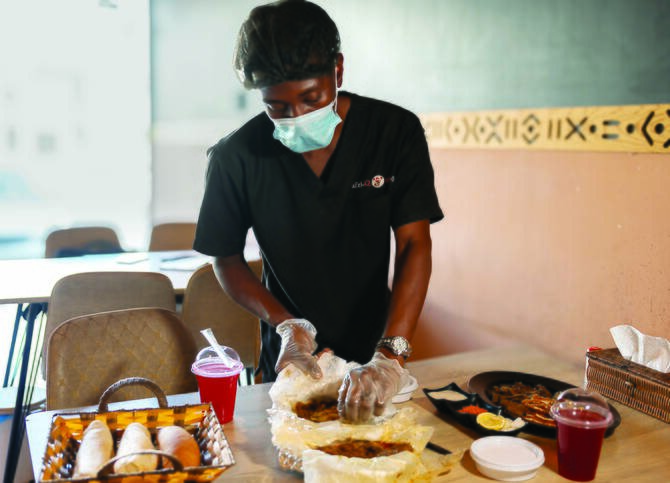
Sereh Finds New Roots in Saudi Arabia: A Taste of Nigeria in Makkah's Kitchens
The African street food sereh, traditionally known as tsire or suya, has found a niche in the culinary scene of Saudi Arabia, particularly in Makkah.
Riyadh: Sereh, an indigenous African dish with roots deeply embedded in Nigerian tradition, has made significant inroads into the gastronomic landscape of Saudi Arabia.
Historically consumed as street food in Makkah's older districts such as Al-Mansour, Al-Hafayer, and Al-Barno, sereh now transcends its origins to symbolize a narrative of migration, cultural amalgamation, and shared culinary tastes.The essence of sereh lies in its composition: skewered beef marinated with a robust blend of African spices that is grilled over open flames.
This method not only imbues the dish with flavor but also envelops it in an aromatic aura.
As Rodwan Fallatah, proprietor of Riyadh's African restaurant AfriQ, elucidates, "Tamiz or Afghani bread was another street staple; they often accompanied each other." This combination created a culinary experience where one could enjoy the sereh with freshly baked bread.Originating from Nigeria’s Hausa tribe—a group spanning northern Nigeria and southern Niger—the dish's journey to Saudi Arabia is emblematic of cross-cultural exchange.
Zainab Hawsawi, a prominent Saudi writer and businesswoman, underscores her pride in the Hausa culinary tradition and the global reach of sereh, noting its rich accompaniments such as dambu nama, kilishi, and balangu.The dish's introduction to Saudi Arabia is often credited to the Hajj pilgrimage, an event that brings together people from all corners of the world.
These travelers introduced their foods, including sereh, which gradually became integrated into Makkah’s culinary milieu, fusing with local tastes.Makkah, renowned for its cultural melting pot, provided a fertile ground for this fusion to take root.
As locals tasted new cuisines, they began experimenting and adapting them, leading to the creation of innovative Saudi dishes.Fallatah's AfriQ restaurant exemplifies this trend; it is a popular destination both for Saudis and international visitors.
He notes that while sereh’s spices are distinctive, their preparation sets it apart; locals engage with these differences, eager to learn and replicate them in their own kitchens.The popularity of sereh among hotel patrons serving pilgrims and tourists underscores its unique allure.
Sereh's evolution from West African street food to a staple on Saudi dinner tables reflects Makkah’s openness and the kingdom's growing appreciation for culinary diversity.As sereh continues to evolve, it stands as a testament to how Saudi Arabia’s kitchens are becoming increasingly global in inspiration, each skewer of sereh representing the fusion of cultures and cuisines.
Historically consumed as street food in Makkah's older districts such as Al-Mansour, Al-Hafayer, and Al-Barno, sereh now transcends its origins to symbolize a narrative of migration, cultural amalgamation, and shared culinary tastes.The essence of sereh lies in its composition: skewered beef marinated with a robust blend of African spices that is grilled over open flames.
This method not only imbues the dish with flavor but also envelops it in an aromatic aura.
As Rodwan Fallatah, proprietor of Riyadh's African restaurant AfriQ, elucidates, "Tamiz or Afghani bread was another street staple; they often accompanied each other." This combination created a culinary experience where one could enjoy the sereh with freshly baked bread.Originating from Nigeria’s Hausa tribe—a group spanning northern Nigeria and southern Niger—the dish's journey to Saudi Arabia is emblematic of cross-cultural exchange.
Zainab Hawsawi, a prominent Saudi writer and businesswoman, underscores her pride in the Hausa culinary tradition and the global reach of sereh, noting its rich accompaniments such as dambu nama, kilishi, and balangu.The dish's introduction to Saudi Arabia is often credited to the Hajj pilgrimage, an event that brings together people from all corners of the world.
These travelers introduced their foods, including sereh, which gradually became integrated into Makkah’s culinary milieu, fusing with local tastes.Makkah, renowned for its cultural melting pot, provided a fertile ground for this fusion to take root.
As locals tasted new cuisines, they began experimenting and adapting them, leading to the creation of innovative Saudi dishes.Fallatah's AfriQ restaurant exemplifies this trend; it is a popular destination both for Saudis and international visitors.
He notes that while sereh’s spices are distinctive, their preparation sets it apart; locals engage with these differences, eager to learn and replicate them in their own kitchens.The popularity of sereh among hotel patrons serving pilgrims and tourists underscores its unique allure.
Sereh's evolution from West African street food to a staple on Saudi dinner tables reflects Makkah’s openness and the kingdom's growing appreciation for culinary diversity.As sereh continues to evolve, it stands as a testament to how Saudi Arabia’s kitchens are becoming increasingly global in inspiration, each skewer of sereh representing the fusion of cultures and cuisines.