Saudi Central Bank Unveils Bold Fintech Agenda to Cement Kingdom’s Hub Status
Governor outlines three-fold growth, digital payments leap and infrastructure commitments at Riyadh fintech summit
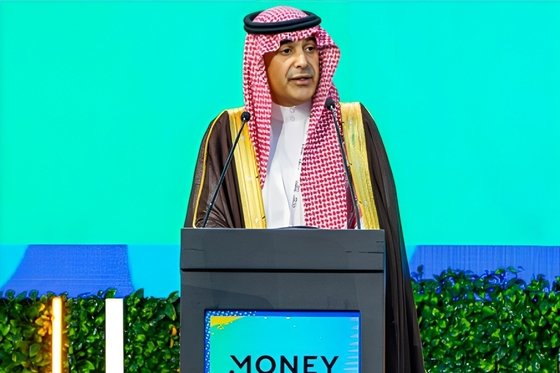
The Governor of the Saudi Central Bank (SAMA), Ayman Al‑Sayari, has set out an ambitious vision placing Saudi Arabia at the heart of global financial-technology innovation.
Speaking at the opening of Money20/20 Middle East in Riyadh on 15 September 2025, he revealed that the number of fintech firms in the Kingdom has risen from eighty-two at end-2022 to 281 by August 2025.
Al-Sayari outlined cumulative fintech investment of over 8.9 billion Saudi riyals (approximately US$2.4 billion) as of July 2025, underscoring investor confidence and the sector’s rapid maturation.
He further noted the digital payments ecosystem has achieved a milestone: electronic transactions accounted for 79 per cent of all retail payments in 2024, with payments volume rising to 12.6 billion from 10.8 billion in 2023.
Woven into the wider Vision 2030 reform and the Financial Sector Development Programme, SAMA is advancing infrastructure upgrades such as a new real-time gross settlement system and same-day check-clearing, alongside the launch of an e-services portal to streamline licensing and supervisory processes.
Regulatory initiatives like the Regulatory Sandbox, Fintech Saudi and the Makken programme aim to nurture startups and scale innovation under SAMA’s oversight.
Governor Al-Sayari emphasised the Kingdom’s strategic advantages: its geographic position linking the Middle East, Africa and Asia; a tech-savvy, mobile-first population; and a regulatory environment designed to enable global-scale fintech solutions.
He also affirmed the importance of cross-border cooperation, stating that fintech innovation “thrives when knowledge, standards and infrastructure are harmonised.”
The Governor’s address marked a milestone in Saudi Arabia’s efforts to pivot from a resource-based economy toward one underpinned by digital financial services and global partnerships.
With fintech companies tripled, investment flooding in and payments transformed, the Kingdom now appears poised to play a central role in the future of finance.
While the path has been set, the real test lies ahead: executing infrastructure roll-outs, deepening regulatory effectiveness and translating fintech ambition into exportable capability on the world stage.
Speaking at the opening of Money20/20 Middle East in Riyadh on 15 September 2025, he revealed that the number of fintech firms in the Kingdom has risen from eighty-two at end-2022 to 281 by August 2025.
Al-Sayari outlined cumulative fintech investment of over 8.9 billion Saudi riyals (approximately US$2.4 billion) as of July 2025, underscoring investor confidence and the sector’s rapid maturation.
He further noted the digital payments ecosystem has achieved a milestone: electronic transactions accounted for 79 per cent of all retail payments in 2024, with payments volume rising to 12.6 billion from 10.8 billion in 2023.
Woven into the wider Vision 2030 reform and the Financial Sector Development Programme, SAMA is advancing infrastructure upgrades such as a new real-time gross settlement system and same-day check-clearing, alongside the launch of an e-services portal to streamline licensing and supervisory processes.
Regulatory initiatives like the Regulatory Sandbox, Fintech Saudi and the Makken programme aim to nurture startups and scale innovation under SAMA’s oversight.
Governor Al-Sayari emphasised the Kingdom’s strategic advantages: its geographic position linking the Middle East, Africa and Asia; a tech-savvy, mobile-first population; and a regulatory environment designed to enable global-scale fintech solutions.
He also affirmed the importance of cross-border cooperation, stating that fintech innovation “thrives when knowledge, standards and infrastructure are harmonised.”
The Governor’s address marked a milestone in Saudi Arabia’s efforts to pivot from a resource-based economy toward one underpinned by digital financial services and global partnerships.
With fintech companies tripled, investment flooding in and payments transformed, the Kingdom now appears poised to play a central role in the future of finance.
While the path has been set, the real test lies ahead: executing infrastructure roll-outs, deepening regulatory effectiveness and translating fintech ambition into exportable capability on the world stage.