Saudi Press

Saudi Arabia and the world
Sunday, Jan 25, 2026

Saudi banks on electric vehicles, to profit $20 bn with Lucid

Saudi banks on electric vehicles, to profit $20 bn with Lucid

The kingdom of Saudi Arabia stands to record a profit of nearly $20 billion on a $2.9 bn investment in Lucid Motors Inc., a San Francisco Bay Area electric-car maker.

This follows Lucid Motors shares trading on the Nasdaq starting Monday, July 26, after the company’s merger with Churchill Capital Corp, a special-purpose acquisition company, or SPAC.

The Saudi Public Investment Fund will own over 60% of the company, which is expected to have a market capitalization of about $36 billion.

The listing represents the fruits of a well-timed 2018 investment in Lucid when it was struggling for survival. Its lifeline came thanks to Saudi Crown Prince Mohammed bin Salman who is pushing his country’s Public Investment Fund (PIF) to invest in promising startups as part of a bid to diversify the country’s wealth away from oil.

A flood of amateur stock traders has pushed up prices of companies merging with SPACs, especially in the electric-vehicle space, as traders bet that startups will emulate Tesla Inc.’s stock market success leveraging the auto industry’s shift away from gasoline engines.
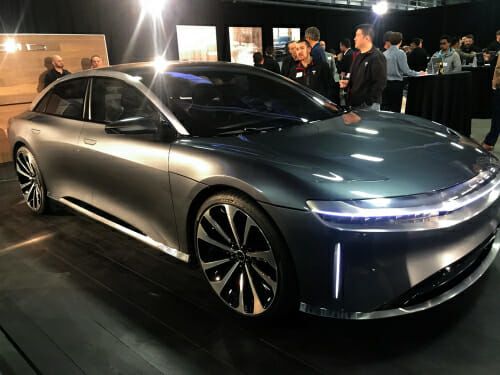

Lucid’s expected market capitalization is nearly twice the valuation of Nissan Motor Co. and about two-thirds that of Ford Motor Co., which delivered more than 4 million cars last year. Lucid has yet to sell any cars. It plans to start production later this year.

In all, more than 23 companies making electric vehicles or batteries have struck deals to go public through SPACs in the past year. The deals have raised over $17 billion for the companies. Lucid has said it expects revenue of $22 billion in 2026.

As part of the deal, Lucid committed to building a factory in Saudi Arabia, according to the company’s securities filings.

EV growth


In March 2021, the Swedish company Volvo declared that by 2030 it will sell only fully electric cars. Just weeks earlier, Ford had announced plans to go all-electric in Europe by the same year, while GM is aiming for its cars to be fully electric by 2035. Last year, electric vehicles made up less than 3% of all new car sales in the United States, but a recent analysis by Bloomberg predicts that their global market share will soar to nearly 60% in just 20 years.
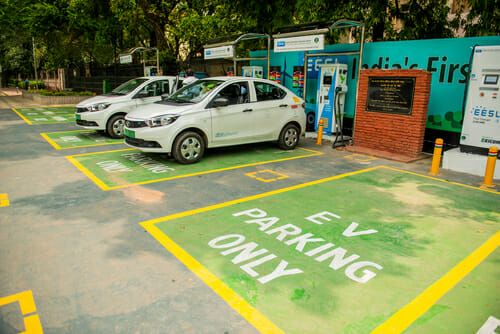

EVs pollute but are cleaner than internal combustion


A new study lays to rest the tired argument that electric vehicles aren’t much cleaner than internal combustion vehicles. Over the life cycle of an EV, from digging up the materials needed to build it to eventually laying the car to rest, it will release fewer greenhouse gas emissions than a gas-powered car, the research found.

That holds true globally, whether an EV plugs into a grid in Europe with a larger share of renewables or a grid in India that still relies heavily on coal.

“We have a lot of lobby work from parts of the automotive industry saying that electric vehicles are not that much better if you take into account the electricity production and the battery production. We wanted to look into this and see whether these arguments are true,” says Georg Bieker, a researcher at the nonprofit research group the International Council on Clean Transportation (ICCT) that published the report.

Lifetime emissions for an EV in Europe are between 66 and 69% lower compared to that of a gas-guzzling vehicle, the analysis found. In the US, an EV produces between 60 to 68% fewer emissions. In China, which uses more coal, an EV results in between 37 to 45% fewer emissions. In India, it’s between 19 to 34% lower.

Issues with rechargeable batteries


Electric vehicles that can travel long distances and recharge quickly require safe batteries that pack a lot of energy into a small volume. Building those batteries, however, means overcoming a number of challenges. Chief among them is the problem of dendrites—disruptive, spiky growths of metal inside a battery that raise the risk of dangerous discharges.

These dendrites threaten to curtail the development of rechargeable batteries.
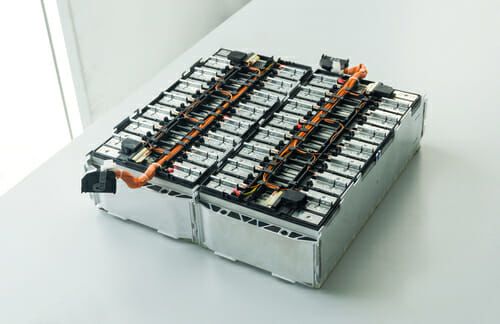

In lithium-ion batteries, which power today’s electric vehicles, the electrolyte is often a flammable liquid. A 2017 report from the Federal Aviation Administration estimated that lithium-ion battery fires in computers, phones, or even e-cigarette chargers occur on flights about once every 10 days, and those fires can often be traced to separator problems that dendrites may have exacerbated.

Experimental efforts to tame dendrites have produced promising, proof-of-concept demonstrations that capitalize on the strengths of lithium batteries while minimizing dendrite risk. These include strategies such as making nanoscale-level changes to the structure of the electrodes, studying the fundamental causes of dendrites, and exploring new materials for the anode-electrolyte interface and the electrolyte itself.

Newsletter

Related Articles

Saudi Press
0:00
0:00
Close
Saudi Industrial Group Completes One Point Three Billion Dollar Acquisition of South Africa’s Barloworld
Saudi-Backed LIV Golf Confirms Return to Trump National Bedminster for 2026 Season
Gold Jumps More Than 8% in a Week as the Dollar Slides Amid Greenland Tariff Dispute
Boston Dynamics Atlas humanoid robot and LG CLOiD home robot: the platform lock-in fight to control Physical AI
United States under President Donald Trump completes withdrawal from the World Health Organization: health sovereignty versus global outbreak early-warning access
Trump Administration’s Iran Military Buildup and Sanctions Campaign Puts Deterrence Credibility on the Line
Tech Brief: AI Compute, Chips, and Platform Power Moves Driving Today’s Market Narrative
NATO’s Stress Test Under Trump: Alliance Credibility, Burden-Sharing, and the Fight Over Strategic Territory
Saudi Arabia’s Careful Balancing Act in Relations with Israel Amid Regional and Domestic Pressures
Greenland, Gaza, and Global Leverage: Today’s 10 Power Stories Shaping Markets and Security
America’s Venezuela Oil Grip Meets China’s Demand: Market Power, Legal Shockwaves, and the New Rules of Energy Leverage
Trump’s Board of Peace: Breakthrough Diplomacy or a Hostile Takeover of Global Order?
Prince William to Make Official Visit to Saudi Arabia in February
Saudi Arabia Advances Ambitious Artificial River Mega-Project to Transform Water Security
Saudi Crown Prince and Syrian President Discuss Stabilisation, Reconstruction and Regional Ties in Riyadh Talks
Mohammed bin Salman Confronts the ‘Iranian Moment’ as Saudi Leadership Faces Regional Test
Cybercrime, Inc.: When Crime Becomes an Economy. How the World Accidentally Built a Twenty-Trillion-Dollar Criminal Economy
Strategic Restraint, Credible Force, and the Discipline of Power
Donald Trump Organization Unveils Championship Golf Course and Luxury Resort Project in Saudi Arabia
Inside Diriyah: Saudi Arabia’s $63.2 Billion Vision to Transform Its Historic Heart into a Global Tourism Powerhouse
Trump Designates Saudi Arabia a Major Non-NATO Ally, Elevating US–Riyadh Defense Partnership
Trump Organization Deepens Saudi Property Focus with $10 Billion Luxury Developments
There is no sovereign immunity for poisoning millions with drugs.
Mohammed bin Salman’s Global Standing: Strategic Partner in Transition Amid Debate Over His Role
Saudi Arabia Opens Property Market to Foreign Buyers in Landmark Reform
The U.S. State Department’s account in Persian: “President Trump is a man of action. If you didn’t know it until now, now you do—do not play games with President Trump.”
CNN’s Ranking of Israel’s Women’s Rights Sparks Debate After Misleading Global Index Comparison
Saudi Arabia’s Shifting Regional Alignment Raises Strategic Concerns in Jerusalem
OPEC+ Holds Oil Output Steady Amid Member Tensions and Market Oversupply
Iranian Protests Intensify as Another Revolutionary Guard Member Is Killed and Khamenei Blames the West
President Trump Says United States Will Administer Venezuela Until a Secure Leadership Transition
Delta Force Identified as Unit Behind U.S. Operation That Captured Venezuela’s President
Trump Announces U.S. Large-Scale Strike on Venezuela, Declares President Maduro and Wife Captured
Saudi-UAE Rift Adds Complexity to Middle East Diplomacy as Trump Signals Firm Leadership
OPEC+ to Keep Oil Output Policy Unchanged Despite Saudi-UAE Tensions Over Yemen
Saudi Arabia and UAE at Odds in Yemen Conflict as Southern Offensive Deepens Gulf Rift
Abu Dhabi ‘Capital of Capital’: How Abu Dhabi Rose as a Sovereign Wealth Power
Diamonds Are Powering a New Quantum Revolution
Trump Threatens Strikes Against Iran if Nuclear Programme Is Restarted
Why Saudi Arabia May Recalibrate Its US Spending Commitments Amid Rising China–America Rivalry
Riyadh Air’s First Boeing 787-9 Dreamliner Completes Initial Test Flight, Advancing Saudi Carrier’s Launch
Saudi Arabia’s 2025: A Pivotal Year of Global Engagement and Domestic Transformation
Saudi Arabia to Introduce Sugar-Content Based Tax on Sweetened Drinks from January 2026
Saudi Hotels Prepare for New Hospitality Roles as Alcohol Curbs Ease
Global Airports Forum Highlights Saudi Arabia’s Emergence as a Leading Aviation Powerhouse
Saudi Arabia Weighs Strategic Choice on Iran Amid Regional Turbulence
Not Only F-35s: Saudi Arabia to Gain Access to the World’s Most Sensitive Technology
Saudi Arabia Condemns Sydney Bondi Beach Shooting and Expresses Solidarity with Australia
Washington Watches Beijing–Riyadh Rapprochement as Strategic Balance Shifts
Saudi Arabia Urges Stronger Partnerships and Efficient Aid Delivery at OCHA Donor Support Meeting in Geneva
×