

Riyadh-based horse specialist steps in to fill ‘knowledge void’ on animal welfare
Kirsten Hanin Johnston, a US stable management and equine specialist, has highlighted the issue of biosecurity around horse breeding and warned against what she describes as a “knowledge void” in a number of issues in the field. Good stable management is the main factor in safeguarding horses’ health and preventing the introduction or spread of harmful organisms, she said.
Johnston, who is currently based in Riyadh, said that horses differ from other animals in the sense that their digestive system is extremely sensitive and “can be distressed by slight changes in diet, scheduling of food, exercise, water and many other factors that are managed in the stable.”
Sudden or inappropriate changes can cause disease or colic, she said.
“Best practice suggests that a stable should have frequent educational programs for employees to elevate the overall function of the stable and build more reliable services for the horses,” Johnston said.
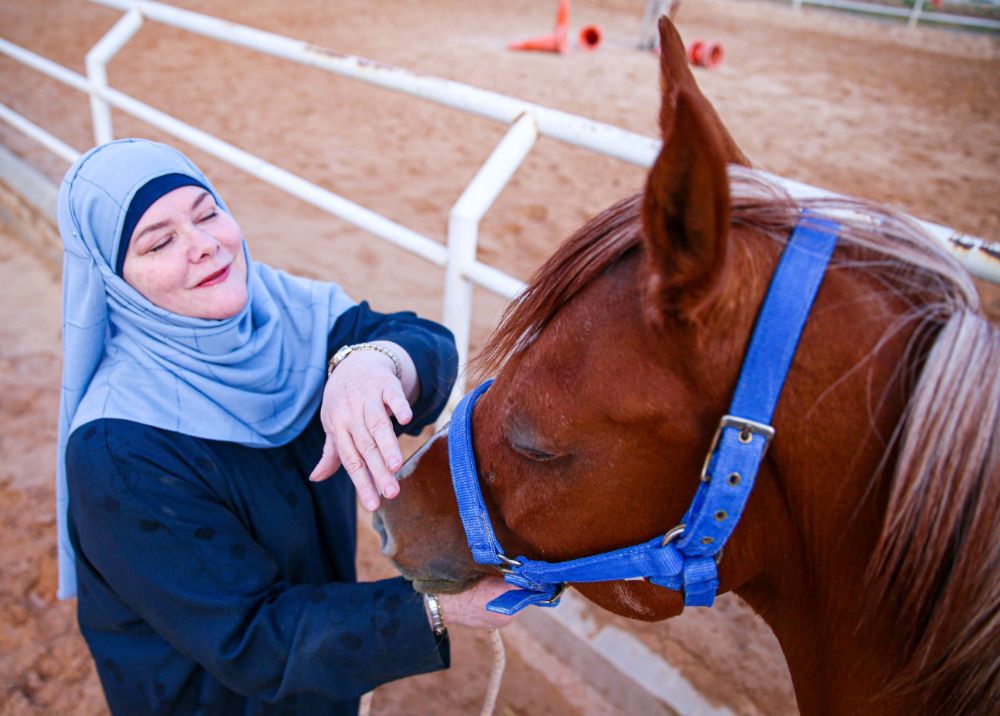 Kirsten Hanin Johnston, an American Stable management specialist based in Riyadh.
“Many managers assign certain roles for each groom, and it is also wise to assign one groom to about six to eight horses,” she added.
Johnston’s interest in horses began at a young age in Germany, where she attended horse competitions with her grandmother. However, her formal education in stable management began in 2018 at the University of Guelph in Canada.
After being asked to support the management of several small stables in Riyadh, she began to offer advice on horse healthcare and management through channels such as WhatsApp groups, on-site lectures, private consultations and Instagram.
“I am not seeking a full-time stable management position that would require a full-time commitment,” she told Arab News. “I may seek that once I have completed my degree and become certified.”
Johnston focuses on nutritional imbalances in horses, as well as hoof injuries and maintenance.
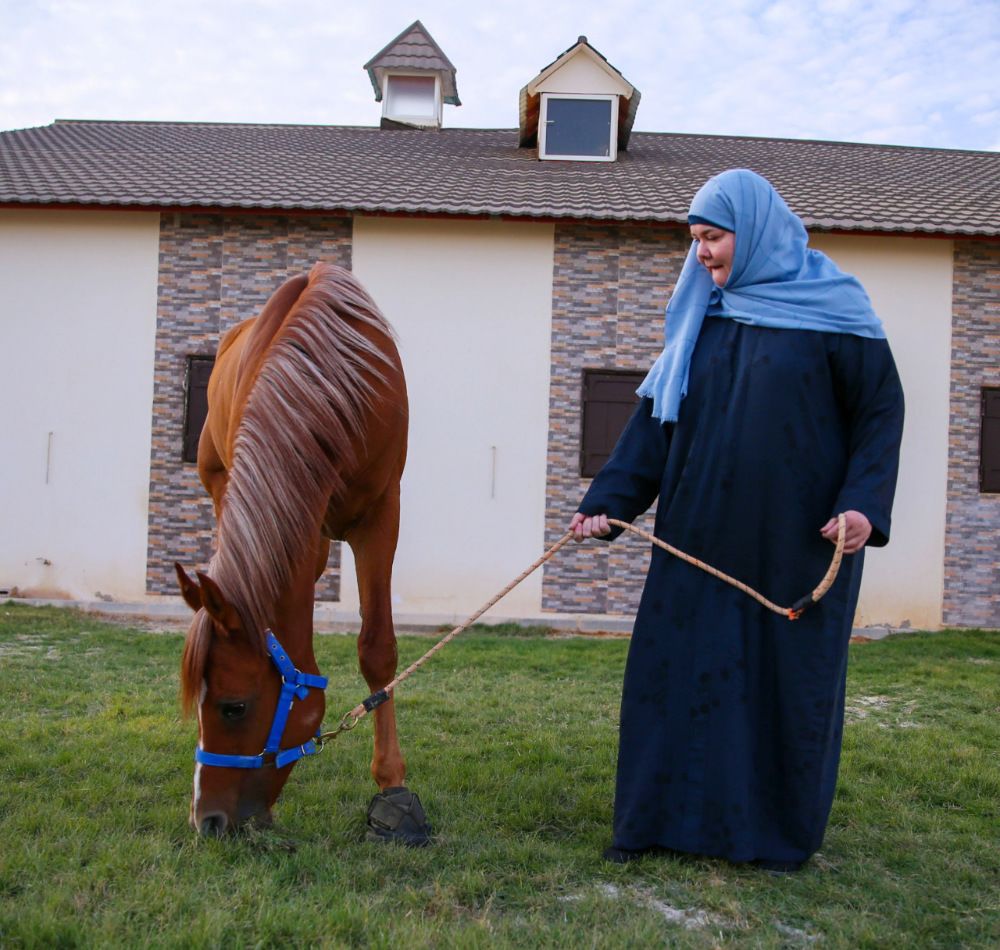 Kirsten Hanin Johnston, an American Stable management specialist based in Riyadh.
She also offers advice on stable management, and warns that poor biosecurity measures can lead to outbreaks of illness and even the death of horses.
With horses frequently transported across the globe for sports or shows, protective controls are critical to controlling the spread of disease from one continent to another.
Poor stable management, such as dirty stalls with strong ammonia fumes, can cause respiratory issues or hoof disease, she said.
Inferior stable design can also threaten horses’ safety and health. If flooring is slippery, for example, falls can result in serious injury to both horses and riders. Small stall sizes can cause emotional distress in horses, which need to move throughout the day.
In a recent case, Johnston visited a stable where the stalls were less than 3 square meters in size. One horse had rolled over and was unable to stand because its legs were trapped against a wall. The same horse was coughing due to the lack of fresh air in the stall and the overwhelming smell of ammonia.
Horses kept in poorly managed stables tend to suffer mental and physical illness, she said.
Johnston said that owners should assume responsibility for how their stables function, and educate themselves on appropriate biosecurity and health guidelines to maintain or improve their horses’ health.
Stable owners should understand the behavior and needs of the horse, and work closely with the administrative team, which relies on the grooms for information on the animals’ welfare.
The main challenge for stable owners in Saudi Arabia is the availability of trained grooms to oversee the daily care, Johnston said.
Other issues include the availability and rising costs of supplies, such as grain, hay and wood shavings.
Medical supplies are often unavailable, and there is a lack of qualified veterinarians and clinics that can treat difficult cases at reasonable prices.
“We are limited to three or four hospitals nationwide, and areas such as Jazan have no medical services. In most cases, owners have limited resources, and the horses die. This can be a crisis for any horse owner, and some of these horses are valued at more than SR1 million ($266,370). Such a loss is tough.”
Johnston warns that there is “a knowledge vacuum when it comes to feeding schedules, types of food, use of medications, especially antibiotics, dewormers, imidocarb for parasites and hormones to speed up the bulking of muscles or growth of foals.”
Additionally, poor riding skills and the absence of safety protocols can result in severe injury or death to both horses and riders.
“Some of our more pressing concerns as owners and managers are the control of illness, especially colic during summer months when the heat, and in some locations the added humidity, coupled with overloading of grains, can cause death,” she said.
“It all comes down to the education of owners, riders, managers and grooms to promote horse welfare and safety.”