

Gadgets have stopped working together, and it’s becoming an issue
In 2001, if you listened to digital music, you did it with a large folder of MP3 files. How you acquired them is probably best left between you and a priest, but you may have ripped them from a CD, downloaded them from a file sharing service, or bought them from one of a few nascent download sites.
Whichever option you picked, you’d play them on your computer with a program built for the task. And if you were lucky enough to have an early standalone MP3 player, it was probably made by another company again.
Whether or not MP3s interested you, you probably bought your music on CD, and had a couple of players in the house – maybe a portable one and a hi-fi. Your headphones, of course, connected to whatever you were using, be that a simple Discman or a fancy Nomad Jukebox, with a normal 3.5mm plug.
Today, for millions of people around the world, all those companies have been replaced by one: Apple. You listen to Apple Music on your Apple iPhone through your Apple AirPods. Sure, competitors exist, but with each passing year they struggle to offer a service on parity. Want to use headphones made by a different company? You need to buy a dongle to plug them in if they’re wired, and you won’t have access to the fancy new “spatial audio” streams Apple now offers if they’re Bluetooth. Want to switch to Spotify? You can, but make sure you never accidentally hit “play” when nothing’s on, or Apple Music will start right back up.
Nostalgia is an ill-fitting emotion for the technology sector, where exponential growth rules. The phone in your pocket – possibly even the watch on your wrist – is substantially more powerful than the desktop computer you may have stashed those music files on, and is connected via a cellular connection a hundred times faster than the 56K modem you used to download your MP3s to an internet unimaginably larger and more useful.
But alongside those wild improvements have come other changes with a more mixed outcome. A concentration of power at the top of the industry; a focus on building easy-to-use gadgets over powerful general-purpose devices; and a shift from programs and files to websites and APIs: all have left us in this slightly run-down sci-fi future. Simply put, nothing works with anything else any more, and it’s starting to become a problem.
Interoperability is the technical term for what we’ve lost as tech has matured. Software can be interoperable, either through common, open file formats, or through different programs speaking directly to one another, and so too can hardware: open standards are what allow you to use any headphones with any music player, for instance, or buy a TV without worrying if it will work with your streaming set-up.
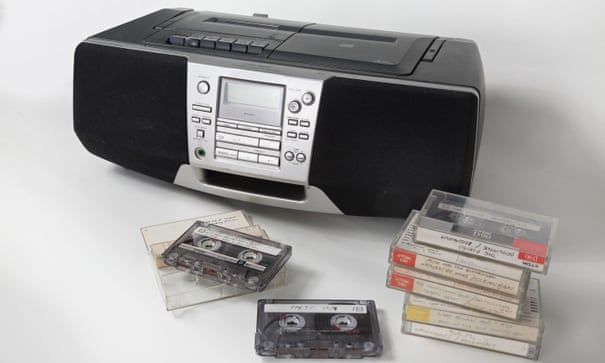 Pre-digital interoperability between brands and formats wasn’t an issue.
It was a hard-fought victory. Think, for instance, of the hassle of receiving a text document a few years back. Not only would you be lucky to be able to open it using a different program from the one that made it – you would frequently need to have exactly the same version of the program, or face issues.
Some of those difficulties were deliberate. Microsoft’s .doc file format, for instance, was used by MS Word for decades, with key details kept hidden behind a restrictive licence. The company very deliberately didn’t want competitors to be able to make software that could read and make Word files without paying it for the trouble. Microsoft’s market dominance meant that it could hamper competing software with the opposite approach: refusing to support their file formats on its own platforms, effectively limiting the ability to collaborate.
Even with the best will in the world, though, it’s a hard goal to achieve. A notorious instalment of the XKCD webcomic details one pitfall: “Situation: there are 14 competing standards,” says the caption to two people discussing how they need to come up with a better way to make all these things work together. The punchline is that “Soon: there are 15 competing standards.”
But by the dawn of the mobile era, there had been progress. The success of standards such as MP3 for music, JPEG for pictures and MPEG for movies had led to a blossoming of consumer tech that could display and play media, while the internet had helped push compatibility to the front of users’ minds: when your pool of collaborators is larger than the people you can walk a floppy disk over to, it’s more important than ever that your software work with everyone, to the point that even Microsoft switched Word over to an open standard.
And then the industry changed.
When the iPhone came out, it was a very different device from what it became. With no App Store, and a model that required a computer to sync to on a regular basis, it was firmly an accessory to the machines where the real business happened. But even as the App Store arrived and the mobile economy flourished, one limitation stuck around: the phones eschewed the old files-and-folders-based model entirely, in favour of each app having access to its own data and nothing else. It would prove consequential.
In the PC files-and-folders era, interoperability was, ultimately, down to users. Software may or may not be compatible, but the decision to try to make a file in one program and open it in another was entirely up to you. You could use two programs made by developers that had never even heard of each other and, so long as they worked with the same open file format, there was interoperability. That’s not true any more.
Even as updates to mobile phone operating systems have allowed apps more freedom to send data back and forth, the same freedom hasn’t been restored to the user. And when two apps are negotiating whether or not to work together, it’s more than just a simple question of technology.
“There’s a ton of issues here,” says Ari Lightman, professor of digital media and marketing at Carnegie Mellon University’s Heinz College in Pittsburgh, Pennsylvania, “but I think one of the major ones is economics. As data becomes more of an asset, it becomes difficult to exchange that data across multiple different parties in an ecosystem, because they’re monetising that asset. And there’s also a lot of stipulations associated with what happens should there be a violation.”
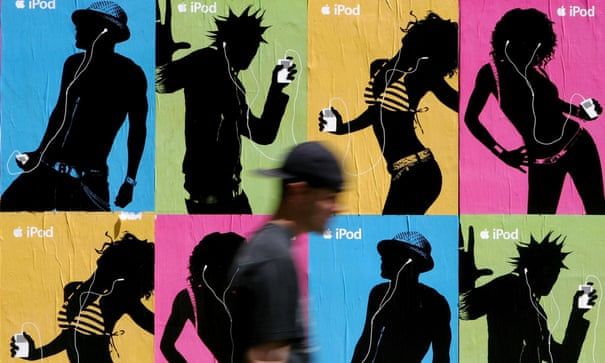 Apple iPod advertisements in San Francisco, 2005.
For many companies, the obvious way around this is to give up on those tricky negotiations altogether – or to hand them off to a larger, more powerful third party. “One of the things that we’re seeing more of, because there’s a consumer push towards this, is using things like Google and Facebook as data sinks,” Lightman says. “Consumers are pushed to say, ‘Well, I want to use this other app,’ a dating app or a productivity app, ‘but I don’t want to fill in all this information, I just want a connection between the two, and I want to shove all the information that I have in Google into this app.’”
Sharing everything you have via Facebook or Google is interoperability of a sort. It’s certainly convenient to be able to log in to Tinder without typing a password, and to automatically populate your dating profile with pictures lifted straight from Instagram. But it’s necessarily limited, both to the services offered by these big companies, and by the fact that they’re not going to help competitors. Notoriously, for instance, Facebook blocked Twitter-owned short video app Vine from this sort of interoperability because, according to an FTC complaint, it wanted to kneecap its rival’s chances of succeeding in the field.
There are exceptions. Perhaps the most famous service bucking the trend has the unwieldy name “IFTTT”, short for “If this then that”. The site’s goal is to be a sort of plumbing for the internet, letting users link together disparate services in all the ways they are normally barred from doing. You can use it, for instance, to send a tweet every time you like a YouTube video, to play the radio when you turn on the (smart) lights in the morning, or just to wire up a big button that orders pizza from Domino’s when you slam it.
But even IFTTT has simply smoothed over the difficulties with making things work together, rather than solving them completely. In fact, its very presence has hindered further openness, some users say: Amazon’s smart home devices, for instance, bar users from building automation using other tools, even if they’re more powerful. For a company of Amazon’s size, simplicity isn’t just a selling point to users: it’s also appealing for Amazon itself. Better to funnel people down one supported service than have to train staff on how to deal with myriad potential problems.
For some, there’s only one outcome that will properly fix things: regulation. Damien Geradin is outside counsel for the Coalition for App Fairness, an industry group that represents companies including Spotify, Tile and Tinder, and has been leading the charge to make interoperability a legal requirement.
“When it comes to Apple, they really like this vertically integrated business model,” Geradin says. “I don’t think that we can say that interoperability has been lost, because it’s never been there. It’s been like that from day one. They like to do everything in house, and they don’t like to make things compatible.
“Now, I think that nobody would challenge that when Apple was a very small company. But now it has become this giant. And it has become a bottleneck in the sense that if you want your app to be distributed on the on iOS devices, you have to go to the App Store. You cannot live without Apple if you’re an app developer. You can’t say ‘screw Apple’, but we want to be able to interoperate, we want to be freer.”
 Apple CEO Tim Cook leaves court earlier this
month after testifying in a federal court case brought by Epic Games,
maker of the game Fortnite, which claims that Apple has transformed its
App Store into an illegal monopoly.
Apple CEO Tim Cook leaves court earlier this
month after testifying in a federal court case brought by Epic Games,
maker of the game Fortnite, which claims that Apple has transformed its
App Store into an illegal monopoly.
Geradin’s group is spearheading a complaint with the European Commission demanding that Apple restore some of that freedom. It’s just one of many such pushes across the world: in America, Epic Games is in the midst of a bruising legal showdown with Apple over much the same issues, while Amazon, Facebook and Google have been dragged into identical battles over their control of their own platforms.
There’s a real chance that we come out of this decade with some of tech’s largest players legally required to begin the painful process of opening up their platforms to the competition – and so, slowly, restoring some of that dream.
In fact, some of the change is coming already. In April, Facebook, seemingly to pre-empt regulatory enforcement, announced an expansion to its “data portability tool”, a feature of the site that lets users send their data from Facebook to other sites and services.
“The ecosystem we are building to support data portability will not come to fruition without regulation that clarifies which data should be made portable and who is responsible for protecting data once it has been transferred,” wrote Facebook’s Steve Satterfield, director of privacy and public policy, in a post announcing the company’s latest feat of interoperability: the ability to directly transfer text posts on Facebook into Google Docs.
Nobody said change was easy, but it’s a start.