Saudi Press

Saudi Arabia and the world
Tuesday, Jul 21, 2026

Facebook challenged over Instagram's mental health impact on kids

Facebook challenged over Instagram's mental health impact on kids

US Senators accused Facebook of hiding research that showed Instagram was harming teenagers. The company says it takes safety "very seriously".

Facebook faced a grilling by the US Senate on Thursday after a week of controversy over leaked internal research showing that Instagram could be harmful to teenagers' mental health.

The research, first revealed by the Wall Street Journal (WSJ), included the finding that 32 per cent of teenage girls said that when they felt bad about their bodies, Instagram made them feel worse.

Teenagers also consistently blamed Instagram for rising rates of anxiety and depression.

On average, one-in-five teenagers said Instagram made them feel worse about themselves. A quarter of British girls said the app made them feel much worse or somewhat worse about themselves.

Facebook said its research showed that Instagram had either no impact or a positive impact on teenage users, although the company acknowledged that its researchers had found the app made body image issues worse for a third of girls.
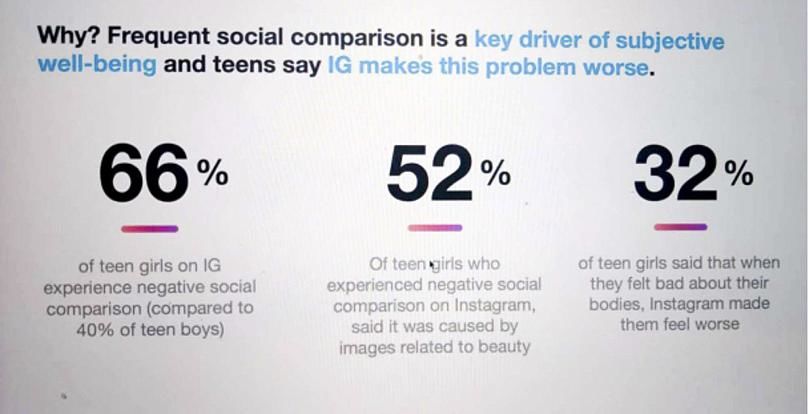
Teenagers often felt worse after comparing themselves neatively to others on Instagram, the research showed


One study from March 2020 on social comparison and body image, which was carried out by Facebook researchers and released by the WSJ this week, found that Instagram's features "exacerbate each other to create a perfect storm," highlighting the way the app led children down a "spiral" of unrealistic beauty ideals and pressure to "look perfect".

Facebook: 'We take safety seriously'


During Thursday's testimony, Facebook’s head of global safety Antigone Davis told US Senators that the company cared about the safety of its users.

"We take the issue very seriously...We have put in place multiple protections to create safe and age-appropriate experiences for people between the ages of 13 and 17," she said.
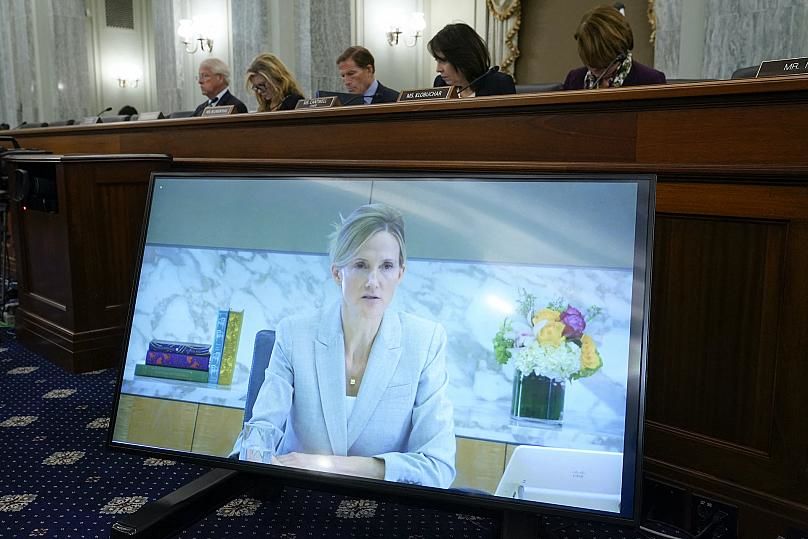
Facebook's Antigone Davis testified via video link on Thursday


Davis also said that teenagers had told Facebook's researchers that Instagram helped them overcome challenging issues like loneliness, anxiety and eating disorders.

"On 11 of the 12 issues, teen girls who said they struggled with those issues were more likely to say that Instagram was affirmatively helping them, not making it worse. That was true for teen boys on 12 of 12 issues," Davis told the Senate Commerce subcommittee.

Profits over health


But chair of the subcommittee Senator Richard Blumenthal said the leaked research showed that Facebook prioritised profits over protecting children from harm.

"I don’t understand how you can deny that Instagram is exploiting young users for its own profit," he told Davis.

"We now know that Facebook routinely puts profits ahead of kids' online safety. We know it chooses the growth of its products over the well-being of our children. And we now know that it is indefensibly delinquent in acting to protect them," Blumenthal said.

Committee member Senator Ed Markey drew parallels between Facebook's internal research and that of the tobacco industry, which covered up studies showing that cigarettes were harmful to human health in the latter half of the 20th century.

"Instagram is that first childhood cigarette meant to get teens hooked early. Facebook is just like Big Tobacco, pushing a product they know is harmful to the health of young people," he said.

Newsletter

Related Articles

Saudi Press
0:00
0:00
Close
High Prices Push Coffee Drinkers Toward Whole Beans and Home Brewing
Trump Draws Boos and Podium Scrutiny at Spain’s World Cup Triumph
Spain Defeats Argentina in Extra Time to Win Second World Cup
Turkey Explores S-400 Transfer to UAE in Bid to Rejoin F-35 Program
US Retaliates Against Iran After Two American Troops Killed in Jordan
Proposed U.S.-Saudi Nuclear Pact Could Permit Limited Uranium Enrichment Under International Safeguards
Why Kentucky Fried Chicken Became KFC—and Why the False Explanations Persist
Iran Claims It Destroyed Bahrain’s Main Artificial Intelligence Center in Missile and Drone Strike
Ukrainian Drones Strike Wildberries Warehouses Deep Inside Russia
Reported CIA Mission Helped Clear the UAE’s Path to Advanced US AI Chips
Artificial Intelligence Capital Fuels Markets While Governments and Regulators Face Mounting Strategic Tests
China’s Moonshot’s Kimi K3 Narrows the Gap With Anthropic Through Scale, Openness and Lower Cost
Gold and Cash Seizure Puts Indonesia’s Senior Anti-Corruption Prosecutor Under Investigation
The Ledger Will Not Trust on Faith
Passenger Bound for Germany Refused to Sit Beside a Woman on a Plane — Then Slapped a Flight Attendant
Ukraine’s Leadership Rift Spills Into the Streets as Protesters Target Army Chief
The Ten World Cup Finals That Defined Football History
Smartphones Are Getting More Expensive, Sales Are Collapsing, and Even Apple Admits: "Prices Will Rise"
Leadership Change and Strategic Rivalry Redraw the Political Map
The AI Race Enters Its Infrastructure Era
Britain Nationalises British Steel to Protect Scunthorpe Production and Strategic Supply
Thomas Tuchel Faces Fierce Backlash After Tactical Retreat Costs England World Cup Final Berth
A Quiet Bastille Day: France Grapples with World Cup Heartbreak and Leftover Fireworks
Spain in Ecstasy: "We Feel Unbeatable, We Taught the Whole World a Lesson"
Harvard Astrophysicist to Lead U.S. Scientific Advisory on Unidentified Aerial Phenomena
Emergency Sirens Activated Across Bahrain as Interior Ministry Issues Shelter Directives
World Cup Visitors Turn American Big-Box Stores Into Souvenir Stops
Netflix Weighs Always-On Channels, Bundles and Short-Form Video
The AI Invoice Shock: Layoffs Didn't Save Managers Money — They Cost Them More
Concern: Sexually Transmitted Bacterium Among Men Develops Antibiotic Resistance
Passenger Partially Pulled Out of Ryanair Jet After Cabin Window Fails Mid-Flight
Severe Heatwave Drives Dangerous Ground-Level Ozone Pollution Across Two Thirds of European Union
The Physical and Electronic Barriers Disrupting Domestic Wireless Networks
France and Morocco Open World Cup Quarter-Finals as Collina Defends Refereeing
Tech Pulse: The Future of AI and Screen Culture
Global News Briefing: Escalating Geopolitical Tensions and Corporate Shakeups
Global News Brief: Escalating Conflicts, Public Health Crises, and World Cup Drama
Europe's Growing Struggle with Extreme Heat and Air Conditioning
Anthropic Reengineers Agentic Architecture to Shift Autonomous Workplace Automation to the Cloud
Logic Flaw in Windows 11 Permission Architecture Silently Consumes Hundreds of Gigabytes of Local Storage
Apple Advances Late-Stage Operating Systems with Fourth Beta Deployments
Global Crisis Alert: Escalating Middle East Tensions and UK Political Upheaval
Japanese Technology Firm Fujitsu Launches Advanced Artificial Intelligence Tool for Corporate Disclosures
South Africa Officially Launches Nationwide Campaign for Highly Contested Local Government Elections
United Kingdom Commits Additional Funding for Unexploded Ordnance Clearance in Laos
Singapore Announces Stringent New Greenhouse Gas Regulations for Commercial Cooling Systems
Cambodia and Thailand Hold High-Level Border Security Talks at United Nations Headquarters
Myanmar Military Government and China Sign Major Agreement to Upgrade Media and Cultural Cooperation
Knife Attack at Swiss Train Station Leaves Three Injured in Suspected Act of Domestic Terrorism
Transnational Extortion Gang Threatens Canadian Police With Army of One Thousand Armed Operatives
×