China Boosts Purchases of Discounted Saudi Crude as Oil Market Glut Widens
November sees highest Chinese crude intake in over two years, with Saudi volumes rising sharply amid global oversupply
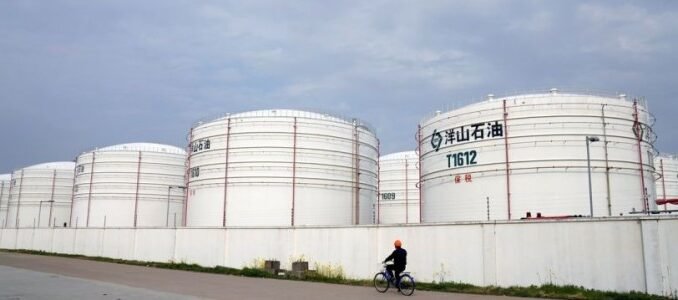
China’s crude oil imports jumped significantly in November 2025, reaching their highest daily level in 27 months, driven in part by a surge in purchases of Saudi Arabian crude.
The increase underlines a broader pattern of stockpiling and discount-driven sourcing as global oil supply outstrips demand.
Official data show China imported about 50.9 million metric tons of crude oil in November, equivalent to roughly 12.38 million barrels per day — a 4.9 percent increase year-on-year and a 5.2 percent rise from October.
Within that total, seaborne crude arrivals from Saudi Arabia climbed by 345,000 barrels per day, lifting the Kingdom’s share of Chinese crude imports to an estimated 1.59 million bpd.
The gains were partly credited to Saudi state-oil firm Saudi Aramco’s decision earlier this year to cut official selling prices for key grades, making them significantly more competitive than rival supplies.
The inflow has helped Chinese refiners restock ahead of 2026. While fuel demand remains sluggish amid a slowdown in road-transport consumption and rising adoption of electric vehicles, refineries are using the price gap to build crude inventories or produce petrochemical feedstocks, which continue to see stable demand.
Industry analysts note that the Chinese buying binge has helped absorb some of the global supply surplus created by recent production increases from the OPEC+ coalition.
At the same time, the surge has squeezed supply for Atlantic-basin refiners and contributed to downward pressure on spot prices — compelling oil exporters to rely increasingly on Asian markets.
Observers warn, however, that the Saudi-China oil boost may prove temporary: structural trends in China — including decarbonisation, expanding renewable energy capacity and shrinking demand for transport fuels — continue to weigh on long-term crude consumption.
As one major trading firm recently forecast, China’s oil-demand growth in 2026 could hit a multi-year low, shifting the burden of global demand growth toward other regions such as India.
For now, Riyadh appears to be capitalising on China’s willingness to buy discounted crude, reinforcing its market position in Asia as it navigates uncertain global energy demand and growing competition from Russian and other Middle Eastern suppliers.
The increase underlines a broader pattern of stockpiling and discount-driven sourcing as global oil supply outstrips demand.
Official data show China imported about 50.9 million metric tons of crude oil in November, equivalent to roughly 12.38 million barrels per day — a 4.9 percent increase year-on-year and a 5.2 percent rise from October.
Within that total, seaborne crude arrivals from Saudi Arabia climbed by 345,000 barrels per day, lifting the Kingdom’s share of Chinese crude imports to an estimated 1.59 million bpd.
The gains were partly credited to Saudi state-oil firm Saudi Aramco’s decision earlier this year to cut official selling prices for key grades, making them significantly more competitive than rival supplies.
The inflow has helped Chinese refiners restock ahead of 2026. While fuel demand remains sluggish amid a slowdown in road-transport consumption and rising adoption of electric vehicles, refineries are using the price gap to build crude inventories or produce petrochemical feedstocks, which continue to see stable demand.
Industry analysts note that the Chinese buying binge has helped absorb some of the global supply surplus created by recent production increases from the OPEC+ coalition.
At the same time, the surge has squeezed supply for Atlantic-basin refiners and contributed to downward pressure on spot prices — compelling oil exporters to rely increasingly on Asian markets.
Observers warn, however, that the Saudi-China oil boost may prove temporary: structural trends in China — including decarbonisation, expanding renewable energy capacity and shrinking demand for transport fuels — continue to weigh on long-term crude consumption.
As one major trading firm recently forecast, China’s oil-demand growth in 2026 could hit a multi-year low, shifting the burden of global demand growth toward other regions such as India.
For now, Riyadh appears to be capitalising on China’s willingness to buy discounted crude, reinforcing its market position in Asia as it navigates uncertain global energy demand and growing competition from Russian and other Middle Eastern suppliers.